What is an EOT Crane? Complete Guide
What is an EOT Crane?
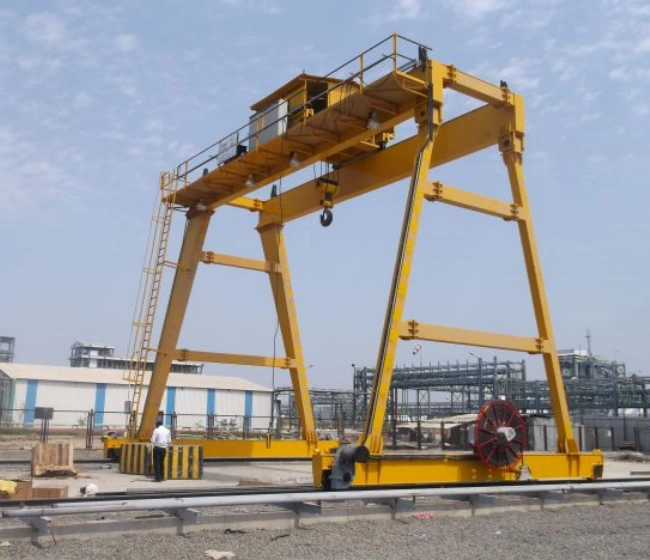
EOT crane stands for "Electric Overhead Traveling Crane." Simply put, it is a lifting device installed above the ceiling of a factory or warehouse, capable of moving heavy loads left and right, forward and backward, and up and down within a rectangular working area.
Think of it as an "aerial robot" – it takes up no floor space, moves freely overhead, and easily transports heavy loads ranging from a few tons to several hundred tons from one location to another.
How Does an EOT Crane Work?
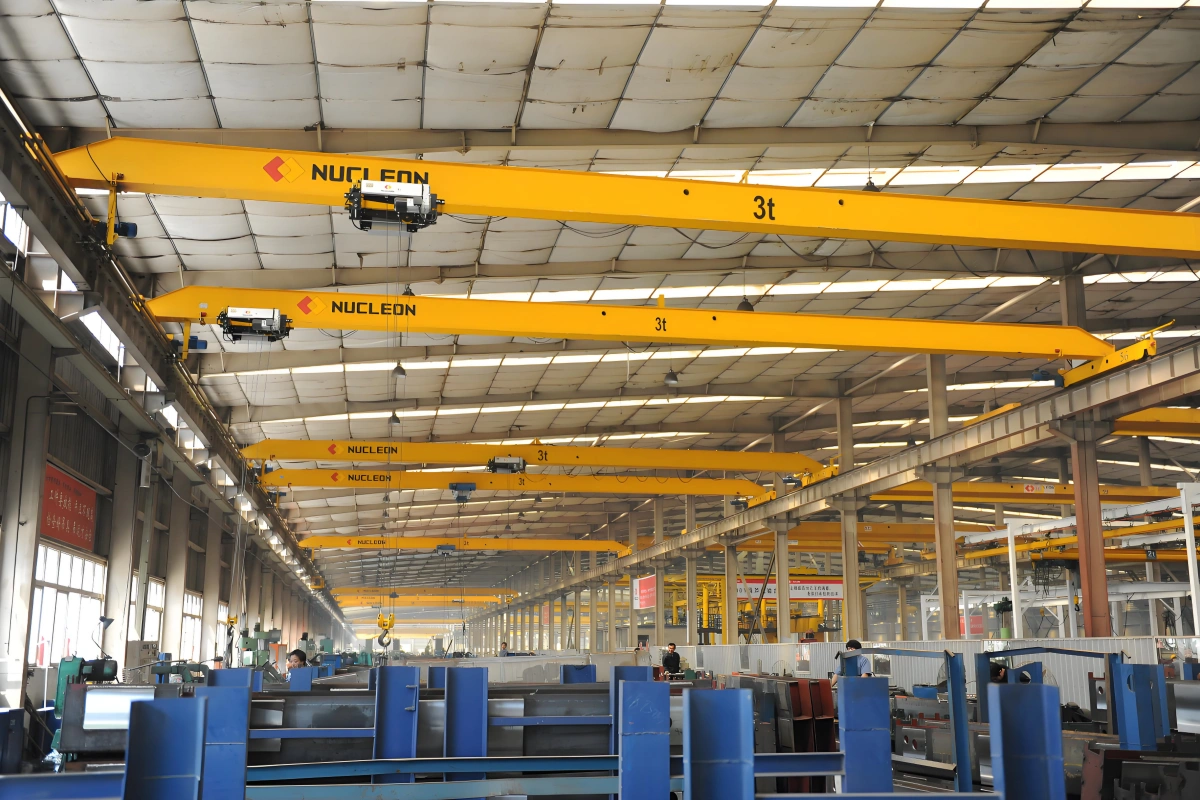
An EOT crane consists of three core components:
1. Bridge
The bridge is the main metal beam that spans across the workshop. It typically consists of either two main girders (double girder) or one main girder (single girder). Like a bridge, its ends are mounted on end carriages that move the entire crane forward and backward along the length of the workshop.
2. Trolley Hoist
The trolley is mounted on rails on the bridge and moves left and right along the bridge. The trolley houses the hoisting mechanism (electric chain hoist or wire rope hoist), which raises and lowers the load via wire rope and hook.
3. End Carriages
Mounted at both ends of the bridge, the end carriages drive the entire crane along the workshop rails.
Through the combination of these three movements – forward/backward of the end carriages, left/right of the trolley, and up/down of the hook – an EOT crane can position a load at any point within its rectangular working area.
Main Types of EOT Cranes
Based on structure, EOT cranes fall into two main categories:
| Type | Features | Applications | Capacity Range |
|---|---|---|---|
| Single Girder | One main beam, simple structure, light self-weight | Light to medium duty, maintenance shops, warehouses | 1 ton – 20 tons |
| Double Girder | Two main beams, high load capacity, excellent stability | Heavy duty, steel mills, manufacturing | 5 tons – 500 tons |
Additionally, by control method: pendant remote control, cabin operation, or remote + cabin dual control.
Main Application Industries for EOT Cranes
EOT cranes appear in almost every industrial scenario requiring heavy load movement:
Mechanical Manufacturing: Handling large components, machine tool loading/unloading
Steel & Metallurgy: Lifting billets, steel coils, finished steel products
Warehouse & Logistics: Heavy cargo loading/unloading and stacking
Automotive Manufacturing: Assembly line handling of car bodies, engines, and components
Paper Industry: Lifting and stacking paper rolls
Mold Shops: Mold changing and maintenance
Power Plants: Component lifting during equipment maintenance
Why Choose an EOT Crane? Five Core Advantages
1. Takes Up No Floor Space
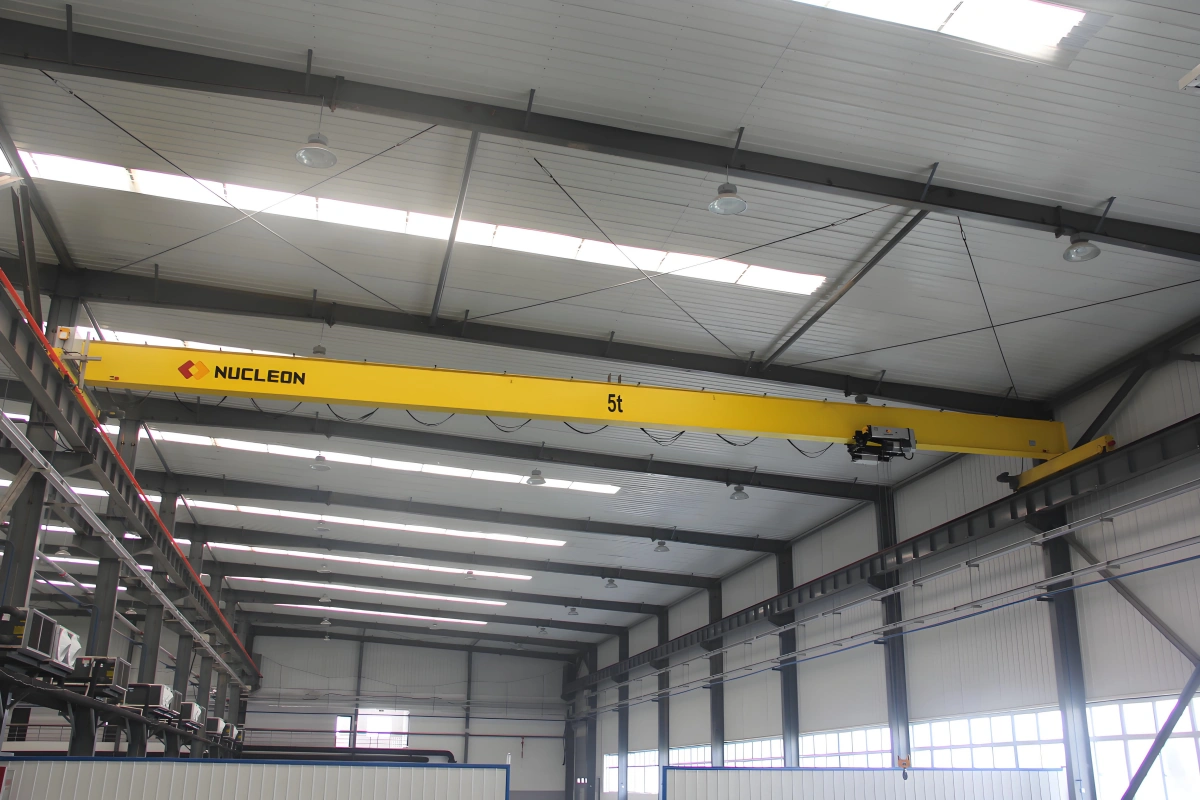
The bridge is installed overhead, leaving the floor completely free for production, storage, or vehicle traffic. Space utilization is maximized.
2. High Working Efficiency
EOT cranes can simultaneously combine end carriage travel, trolley travel, and hook hoisting. Material movement is fast, and production line rhythm stays smooth.
3. Safe and Reliable
Modern EOT cranes come standard with multiple safety features: overload protection, travel limits, anti-collision systems, emergency stop, and more. Operational safety is far superior to floor-based equipment like forklifts.
4. Strong Adaptability
Customizable for special conditions: explosion-proof environments, high-temperature areas, dusty locations, clean rooms – there are configurations for every special application.
5. Automation Ready
EOT cranes integrate easily with automation control systems, enabling remote operation, semi-automatic or fully automatic operation, supporting smart factory initiatives.
How to Choose the Right EOT Crane for You
When selecting an EOT crane, determine these key parameters:
Lifting Capacity: What is the maximum weight you need to lift? (Recommend adding 10%-20% safety margin)
Span: The distance between the workshop rails, determining the length of the bridge.
Lifting Height: The distance from the highest hook position to the floor, depending on your building height.
Duty Class: Choose A3-A8 based on frequency and load. A5 and below suit light duty; A6 and above suit heavy industrial continuous operation.
Control Method: Remote control offers flexibility; cabin operation offers better visibility; both together is the best choice.
Summary
An EOT crane (Electric Overhead Traveling Crane) is an indispensable material handling device in modern industrial production. Installed overhead, it takes up no floor space and completes heavy load handling tasks efficiently and safely. Whether it is handling components in light industry or moving molten steel ladles in heavy industry, an EOT crane provides a reliable solution.
If you are planning a new factory or upgrading your existing lifting equipment, we recommend first clarifying your capacity, span, lifting height, and other requirements, then consulting a professional manufacturer for a custom solution.
Can I Use an Overhead Crane Outdoors? A Professional Guide to Selection and Safety
How to Accurately Calculate Overhead Crane Span?