


PORT CRANE
- Loading And Unloading Crane
- Boat Travel Lift
- Portal Crane
- Container Crane
HOT PRODUCTS
Container Straddle Carrier


Introduction
Application Scenario
Advantages
Structural Diagram And Parameter Table
INTRODUCTION
{"desc":"What is this?\r\n
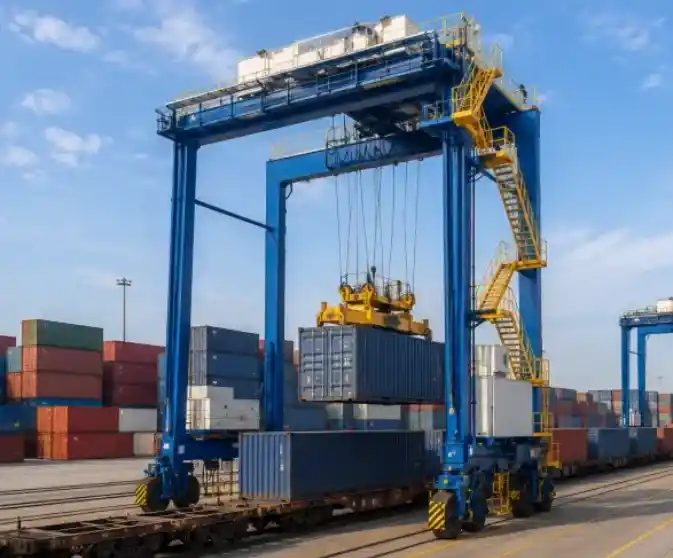
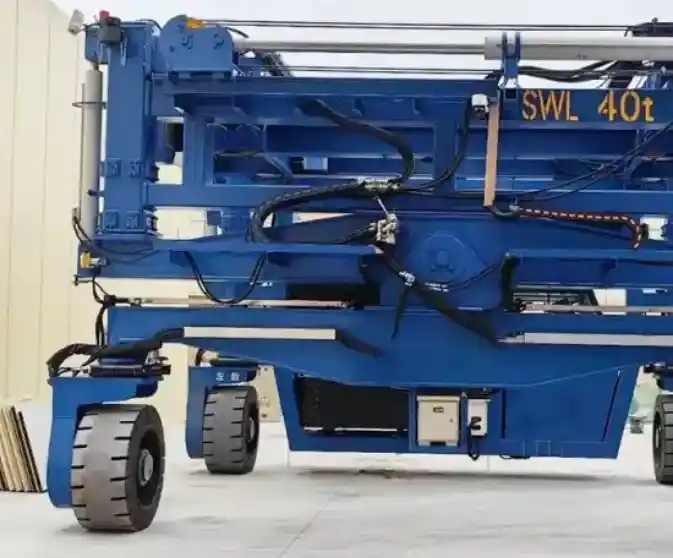
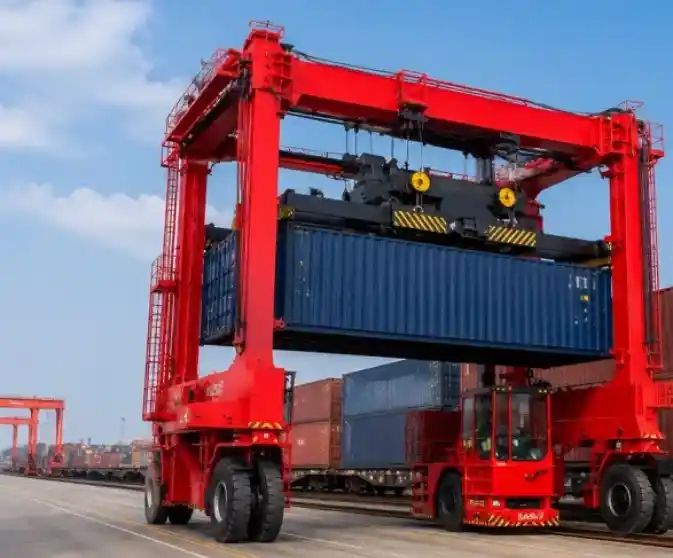
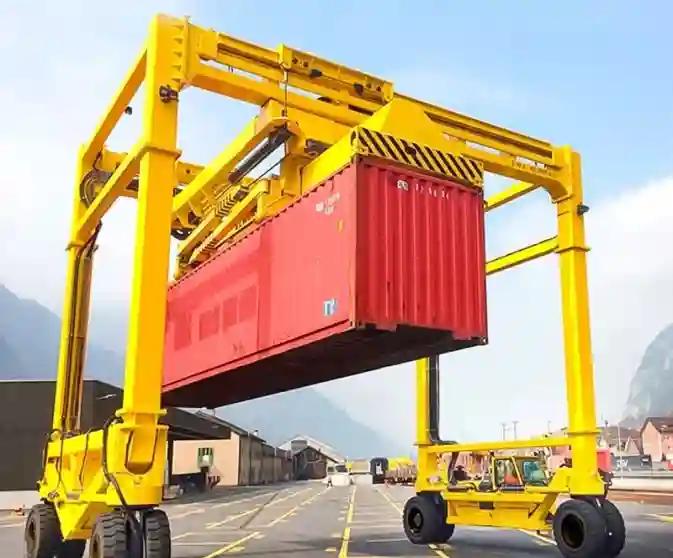
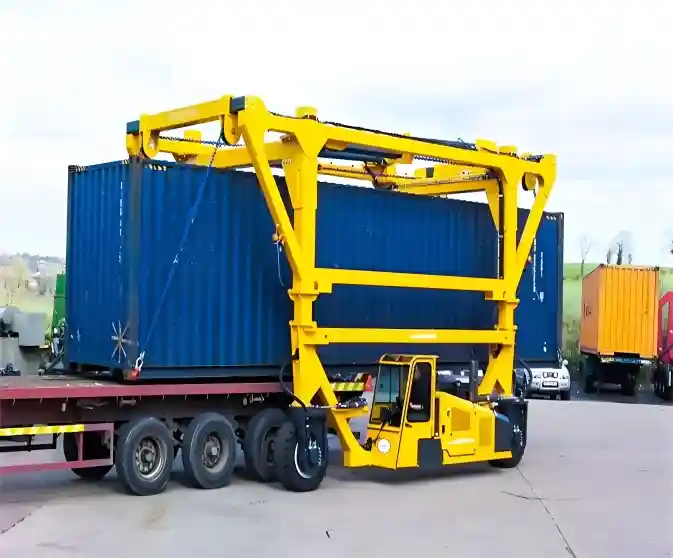
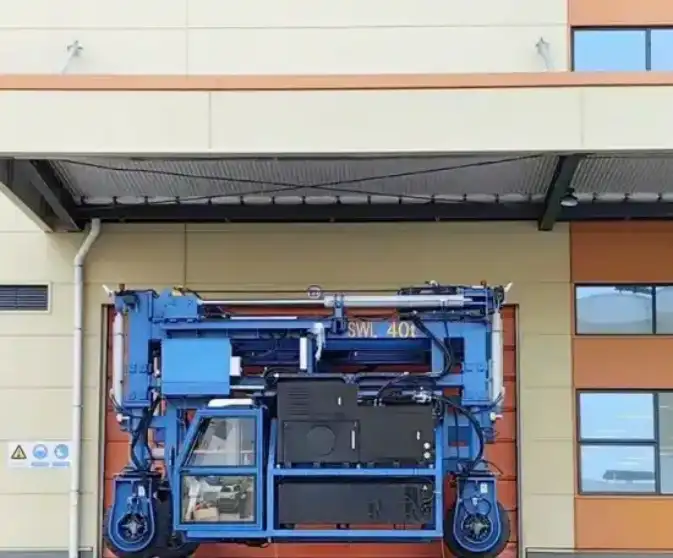
\r\nThe container straddle carrier is a mobile lifting device specifically designed for container yard handling and stacking. Through the carrier's travel and spreader lifting\/lowering, it achieves straddle carrying, stacking, and short-distance transfer of 20-foot and 40-foot containers. If you are managing a seaport terminal, railway yard, intermodal hub, or container transfer station, and need a machine with strong mobility, high operational efficiency, and the ability to quickly transfer between the yard and the dock front, this product is designed for you.\r\n
\r\nWhy choose a container straddle carrier over a rubber-tyred gantry crane?\r\n
\r\nCompared to rubber-tyred gantry cranes, the container straddle carrier offers four core advantages:\r\n
\r\nFirst, stronger mobility – the straddle carrier can travel freely without the need for rails, allowing fast transfer between the yard, dock front, and loading\/unloading areas.\r\n
\r\nSecond, no auxiliary equipment required – self-powered, capable of independently completing the entire process of container loading\/unloading, handling, and stacking without the need for other equipment.\r\n
\r\nThird, integrated stacking and transport – a single machine combines the functions of a yard crane and a horizontal transport vehicle, reducing the number of equipment types and operational steps.\r\n
\r\nFourth, high operational efficiency – from the unloading point to the storage point, the single-cycle operation time is short, especially suitable for short-distance transfer and transshipment operations.\r\n
\r\nSimplify container operation processes with a more integrated approach.\r\n
\r\nWhat can we do for you?\r\n
\r\nWe understand that every yard has different container volumes, different stacking heights, and different operating distances. Therefore, we offer flexible customization options: lifting capacity from 30 tons to 50 tons; stacking height options of 1 layer, 2 layers, or 3 layers; spreader options of fixed 20-foot or telescopic 20-40 foot; power options of diesel or lithium battery (electric); control options of cab operation or remote control combined with cab. Whether your operation scenario is the dock front, yard, or railway terminal, we can match the most suitable stacking capacity and operating mode.\r\n
\r\nUnsure? Don't know?\r\n
\r\nNot sure whether a straddle carrier is suitable for your yard or if other equipment is needed? Not sure what stacking capacity and turning radius are needed to fit your site? No problem. Just tell us: your yard layout and aisle width, your design stacking height, your operating distance, and your annual container throughput. Our engineers will provide you with an accurate quote and operation plan drawings within 24 hours. Click the button below or contact us via WhatsApp\/email to get your customized solution.\r\n
\r\n💡 Tip: We offer free selection consulting. Even if you are unsure about specific parameters, feel free to describe your yard conditions and operation process, and we will calculate for you.","images":[{"url":"portal\/20260509\/4eca7d9b1c0fc327495ecf0dad644454.webp","name":""}]}
APPLICATION SCENARIO
[2] Intermodal Rail Yards – Transferring containers between railcars and truck chassis.
[3] Inland Container Depots – Stacking and retrieving empty or laden containers for storage.
[4] Port Gate Areas – Shuttling containers for inspection or customs clearance.
[5] Terminal Maintenance Zones – Repositioning damaged containers for repair.
ADVANTAGES
[2] Fast Stacking – Can stack containers 3‑4 high, maximizing yard density.
[3] One‑Machine Operation – Combines lifting, transporting, and stacking in a single unit.
[4] Precise Positioning – Twistlock spreader with guidance systems for accurate pickup.
[5] Low Maintenance – Diesel‑electric or hybrid drivetrains with easy access components.
STRUCTURAL DIAGRAM AND PARAMETER TABLE
| Parameter | Specification |
|---|---|
| Working Class | A6, A7, A8 |
| Lifting Capacity | 30 t – 65 t (single container) 40 t – 80 t (twin-lift configuration for 2x20ft) |
| Span | 3.5 m – 7.0 m (clearance between legs for container passage) |
| Lifting Height | 8 m – 12 m (stacking height: 3 – 4 containers high) |
| Lifting Speed | Fully loaded: 8 – 20 m/min Empty: 15 – 35 m/min |
| Travel Speed | 18 – 25 km/h (yard operation) |
| Travel Speed | 25 – 35 km/h |
| Gradeability | 10% – 20% (depending on load and configuration) |
| Turning Radius | 6 m – 12 m |
| Control Method | Cabin control (ergonomic design, 360° visibility) / Remote radio control (optional) |
| Power Supply | Diesel engine – 150kW – 350kW |
| Temperature | -20°C to +45°C |
| Protection Grade | Motors: IP54 – IP55, Insulation class F or H Electrical cabinet: IP54 – IP65 (dust/water protected for outdoor use) |
| Structure Type | U-frame straddle carrier – Four-leg design with lifting spreader and hydraulic steering |




 Free Technical Consultation



