


PORT CRANE
- Loading And Unloading Crane
- Boat Travel Lift
- Portal Crane
- Container Crane
HOT PRODUCTS
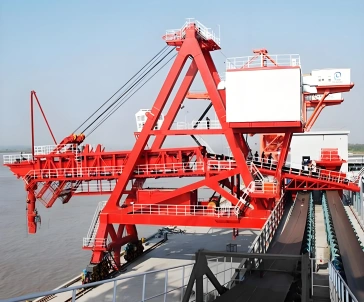
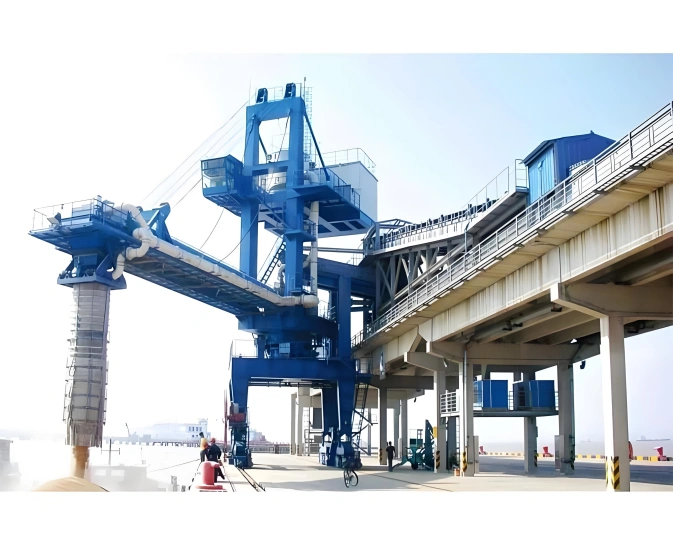
Grab Pneumatic Ship Unloader
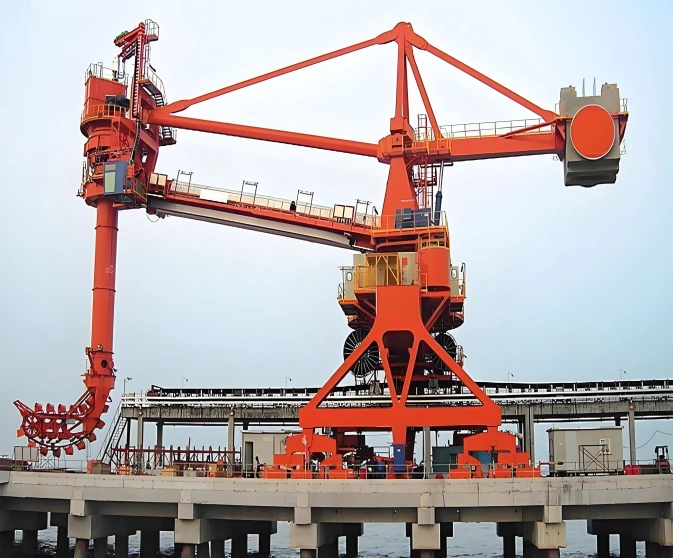
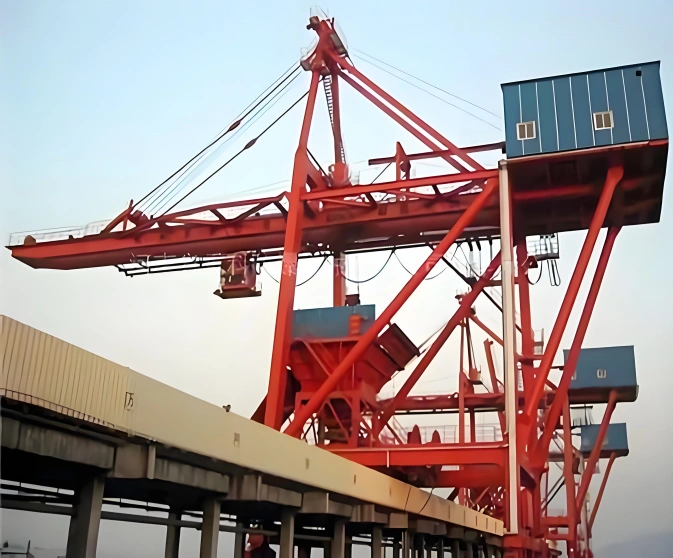
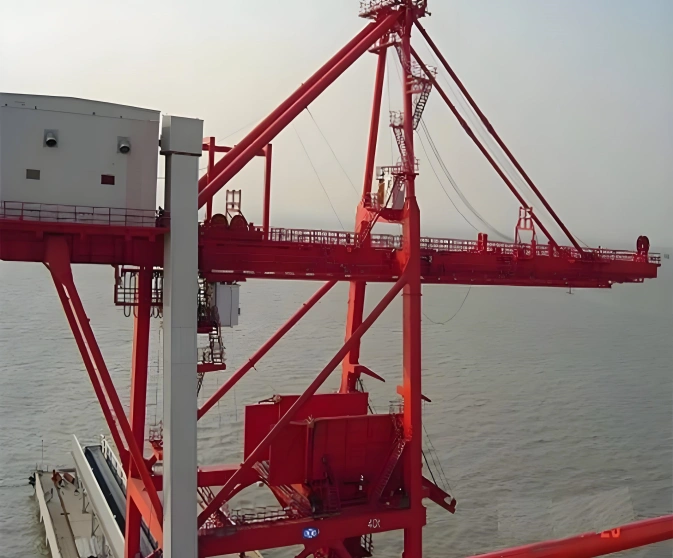
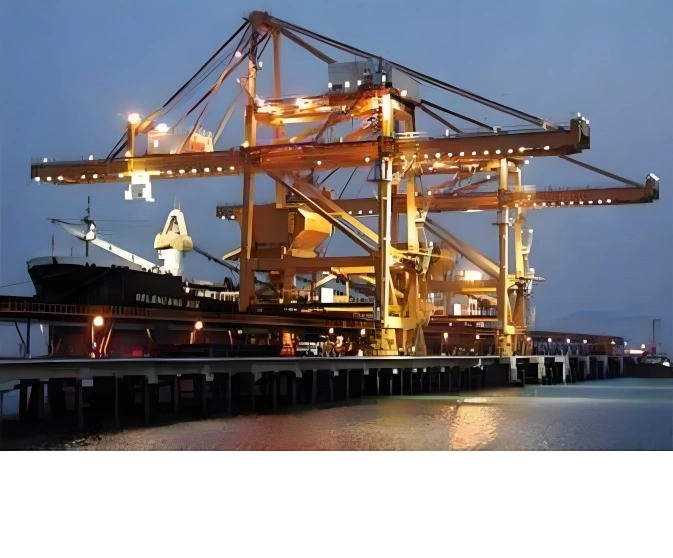
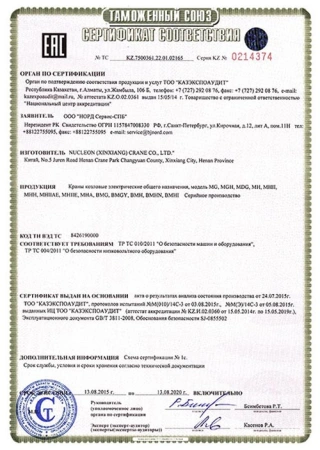
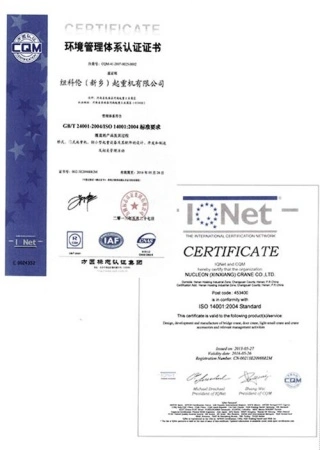
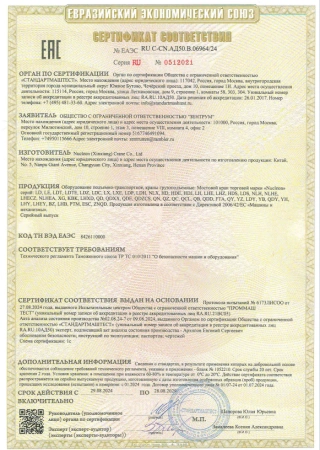
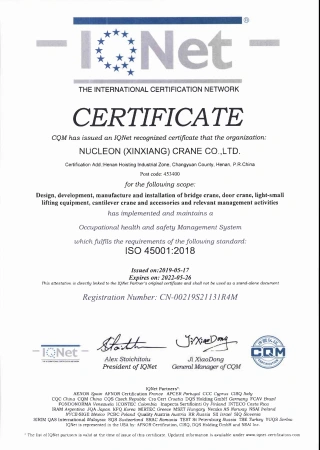
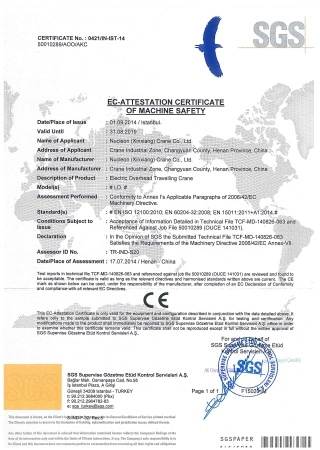
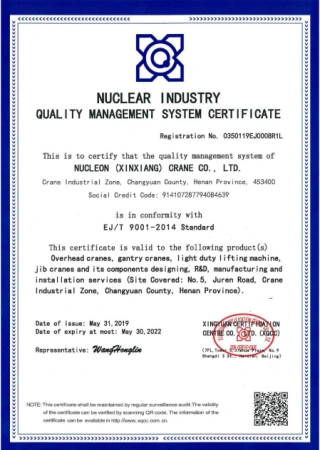
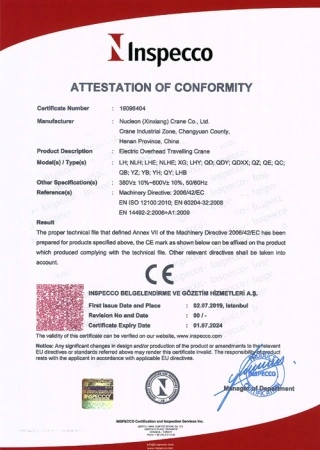
Authentication mark:


This crane is mainly used in bulk cargo ports, cement terminals, and grain import facilities.
Capacity:
16 t – 65 t customizable
Lifting Height:
14 m – 30 m (to ship hatch cover)
Span:
10.5 m – 90 m (distance between quay rails)
Voltage/Hertz:
0kV / 50Hz / 3-phase
Working Class:
A7, A8
Get A Free Quote

WhatsApp
Introduction
Application Scenario
Advantages
Structural Diagram And Parameter Table
INTRODUCTION
What is this?
The grab pneumatic ship unloader is a bulk cargo unloading device that combines grab bucket picking with pneumatic conveying. It uses a grab bucket to pick up bulk materials from ship holds, and a pneumatic conveying system to vacuum-suck and transport the materials to the dock stockyard or hopper, achieving efficient unloading of coal, ore, grain, fertilizer, and other bulk cargoes. If you are managing a port terminal, power plant coal terminal, or bulk logistics park, and need a ship unloader with high efficiency, good dust control, and strong adaptability, this product is designed for you.
Why choose a grab pneumatic ship unloader over a pure grab type or pure pneumatic type unloader?
Compared to pure grab type or pure pneumatic type unloaders, the grab pneumatic solution offers four core advantages:
First, higher unloading efficiency – the grab handles large-capacity picking, while pneumatic conveying handles continuous transportation, combining both for efficient unloading, achieving 30%-50% higher efficiency than pure pneumatic type.
Second, better dust control – the pneumatic conveying system operates in a fully enclosed manner, and the grab operation area is equipped with dust removal devices, significantly reducing dust emissions and meeting environmental requirements.
Third, wider material adaptability – capable of handling various bulk cargoes from powder to granular, from dry to moist; pure pneumatic type is sensitive to moist materials, while pure grab type generates more dust.
Fourth, lower energy consumption – the grab handles the main picking work, reducing the power demand of the pneumatic system, with overall energy consumption 20%-30% lower than pure pneumatic type.
Achieve efficient, environmentally friendly, and low-energy ship unloading with combined technology.
What can we do for you?
We understand that every port has different vessel types, different materials, and different environmental requirements. Therefore, we offer flexible customization options: unloading capacity from 100 tons/hour to 1000 tons/hour; grab bucket capacity from 1m³ to 8m³; pneumatic conveying distance customized according to dock layout; dust removal systems of baghouse or wet type; control options of cabin or remote radio. Whether your port is a small inland river terminal or a large seaport, we can match the most suitable unloading capacity and environmental configuration. Unsure? Don't know? Not sure whether the grab pneumatic solution is suitable for your material? Not sure what unloading capacity you need to meet your operational requirements? No problem. Just tell us: your unloading material type, your target unloading efficiency (tons/hour), your dock berth dimensions, and your environmental emission requirements. Our engineers will provide you with an accurate quote and CAD drawings within 24 hours. Click the button below or contact us via WhatsApp/email to get your customized solution.
💡 Tip: We offer free selection consulting. Even if you are unsure about specific parameters, feel free to describe your material type and unloading needs, and we will calculate for you.
The grab pneumatic ship unloader is a bulk cargo unloading device that combines grab bucket picking with pneumatic conveying. It uses a grab bucket to pick up bulk materials from ship holds, and a pneumatic conveying system to vacuum-suck and transport the materials to the dock stockyard or hopper, achieving efficient unloading of coal, ore, grain, fertilizer, and other bulk cargoes. If you are managing a port terminal, power plant coal terminal, or bulk logistics park, and need a ship unloader with high efficiency, good dust control, and strong adaptability, this product is designed for you.
Why choose a grab pneumatic ship unloader over a pure grab type or pure pneumatic type unloader?
Compared to pure grab type or pure pneumatic type unloaders, the grab pneumatic solution offers four core advantages:
First, higher unloading efficiency – the grab handles large-capacity picking, while pneumatic conveying handles continuous transportation, combining both for efficient unloading, achieving 30%-50% higher efficiency than pure pneumatic type.
Second, better dust control – the pneumatic conveying system operates in a fully enclosed manner, and the grab operation area is equipped with dust removal devices, significantly reducing dust emissions and meeting environmental requirements.
Third, wider material adaptability – capable of handling various bulk cargoes from powder to granular, from dry to moist; pure pneumatic type is sensitive to moist materials, while pure grab type generates more dust.
Fourth, lower energy consumption – the grab handles the main picking work, reducing the power demand of the pneumatic system, with overall energy consumption 20%-30% lower than pure pneumatic type.
Achieve efficient, environmentally friendly, and low-energy ship unloading with combined technology.
What can we do for you?
We understand that every port has different vessel types, different materials, and different environmental requirements. Therefore, we offer flexible customization options: unloading capacity from 100 tons/hour to 1000 tons/hour; grab bucket capacity from 1m³ to 8m³; pneumatic conveying distance customized according to dock layout; dust removal systems of baghouse or wet type; control options of cabin or remote radio. Whether your port is a small inland river terminal or a large seaport, we can match the most suitable unloading capacity and environmental configuration. Unsure? Don't know? Not sure whether the grab pneumatic solution is suitable for your material? Not sure what unloading capacity you need to meet your operational requirements? No problem. Just tell us: your unloading material type, your target unloading efficiency (tons/hour), your dock berth dimensions, and your environmental emission requirements. Our engineers will provide you with an accurate quote and CAD drawings within 24 hours. Click the button below or contact us via WhatsApp/email to get your customized solution.
💡 Tip: We offer free selection consulting. Even if you are unsure about specific parameters, feel free to describe your material type and unloading needs, and we will calculate for you.
APPLICATION SCENARIO
[1] Bulk Cargo Terminals – Unloading coal, iron ore, and grain from large ocean-going vessels.
[2] Cement and Clinker Terminals – Dust-free transfer of powdery materials from ship holds to silos.
[3] Grain Import Ports – Gentle handling of soybeans, corn, and wheat with low breakage.
[4] Fertilizer and Chemical Ports – Pneumatic conveying prevents contamination and moisture. [5] Power Plant Coal Jetty – Supplying coal to conveyors with reduced dust and spillage.
[2] Cement and Clinker Terminals – Dust-free transfer of powdery materials from ship holds to silos.
[3] Grain Import Ports – Gentle handling of soybeans, corn, and wheat with low breakage.
[4] Fertilizer and Chemical Ports – Pneumatic conveying prevents contamination and moisture. [5] Power Plant Coal Jetty – Supplying coal to conveyors with reduced dust and spillage.
ADVANTAGES
[1] High Efficiency – Continuous grab feed + pneumatic transport achieves steady, high unloading rates.
[2] Low Dust Emission – Sealed pipeline system prevents dust pollution, meeting strict environmental regulations.
[3] Low Material Loss – Spillage and wind loss are minimized; clean operation.
[4] Gentle on Materials – Pneumatic suction reduces product degradation compared to mechanical impact.
[5] Compact Design – Small footprint on quayside compared to belt conveyor unloading systems.
[2] Low Dust Emission – Sealed pipeline system prevents dust pollution, meeting strict environmental regulations.
[3] Low Material Loss – Spillage and wind loss are minimized; clean operation.
[4] Gentle on Materials – Pneumatic suction reduces product degradation compared to mechanical impact.
[5] Compact Design – Small footprint on quayside compared to belt conveyor unloading systems.
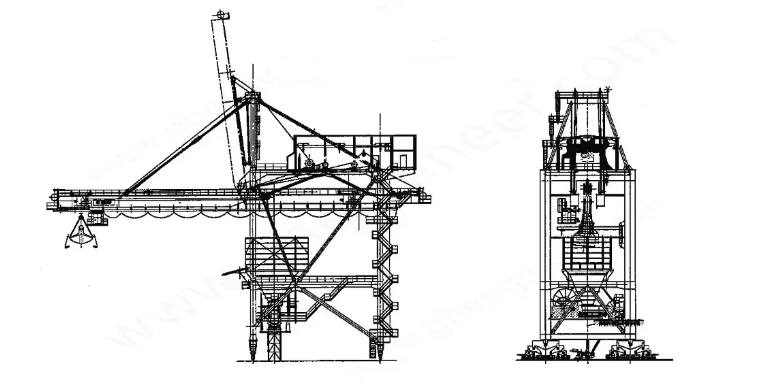
STRUCTURAL DIAGRAM AND PARAMETER TABLE
| Parameter | Specification |
|---|---|
| Working Class | A7, A8 (Heavy to very heavy duty for continuous port operation) |
| Rated Capacity | 400 t/h – 3,000 t/h (depending on material type and vessel size) |
| Lifting Capacity | 16 t – 65 t (standard, up to 100 t for special design) |
| Span (Rail Gauge) | 10.5 m – 90 m (distance between quay rails) |
| Waterside Outreach | 20 m – 50 m (from quay rail to ship centerline) |
| Back Reach | 8 m – 40 m (from quay rail to hopper) |
| Lifting Height (Above Rail) | 14 m – 30 m (to ship hatch cover) |
| Lifting Depth (Below Rail) | 12 m – 26 m (for deep ship holds at low tide) |
| Lifting Speed | 110 – 180 m/min (full load/empty load) |
| Trolley Travelling Speed | 160 – 180 m/min (high-speed for efficient operation) |
| Crane Travelling Speed | 20 – 30 m/min (along quay rail) |
| Boom Luffing Time | 5 – 7 minutes (one-way) |
| Luffing Angle | 0° – 80° (from horizontal) |
| Control Method | Fully automatic / Semi-automatic / Remote radio control / Cabin control |
| Power Supply | 10kV / 50Hz / 3-phase |
| Temperature | -20°C to +50°C |
| Protection Grade | Motors: IP54 – IP55, Insulation class F or H Electrical cabinet: dust/water protected design |
| Vessel Size | 10,000 DWT – 350,000 DWT (standard) |
| Max Wheel Load | ≤550 kN (working condition) |


 Free Technical Consultation



