


PORT CRANE
- Loading And Unloading Crane
- Boat Travel Lift
- Portal Crane
- Container Crane
HOT PRODUCTS
Ship-to-Shore Container Crane (STS Crane / Quay Crane)


Introduction
Application Scenario
Advantages
Structural Diagram And Parameter Table
INTRODUCTION
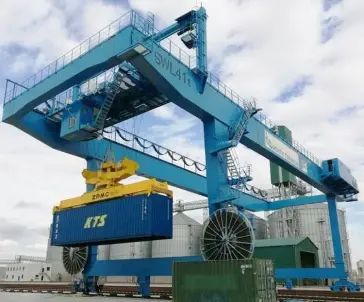
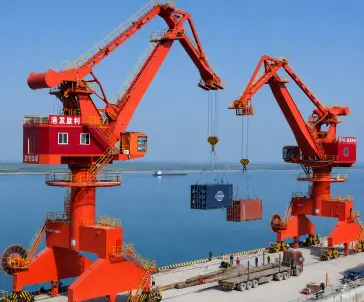
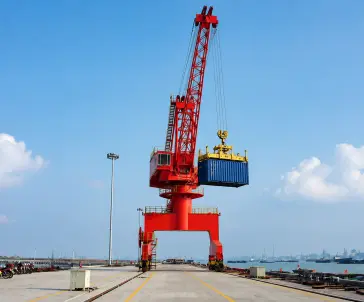
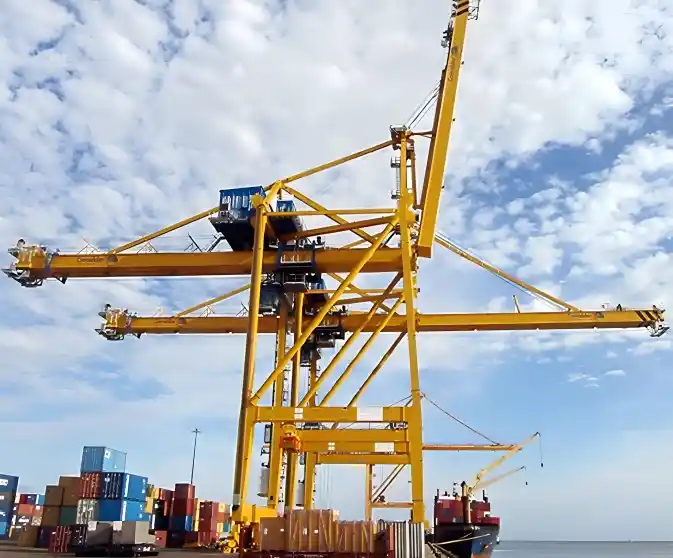
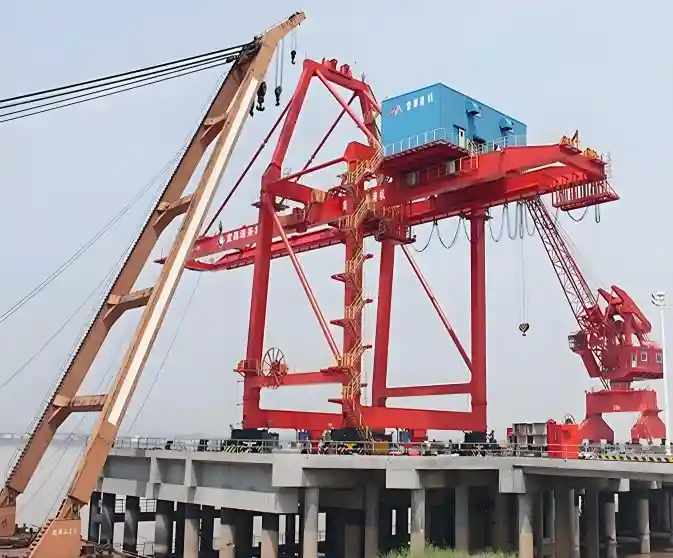
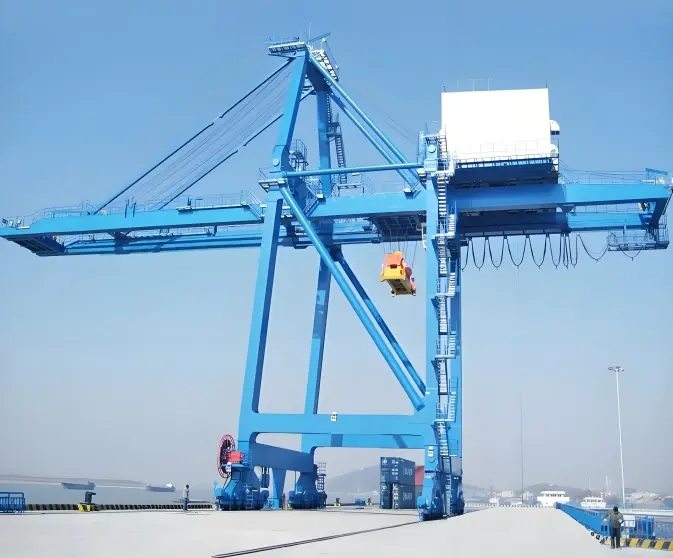
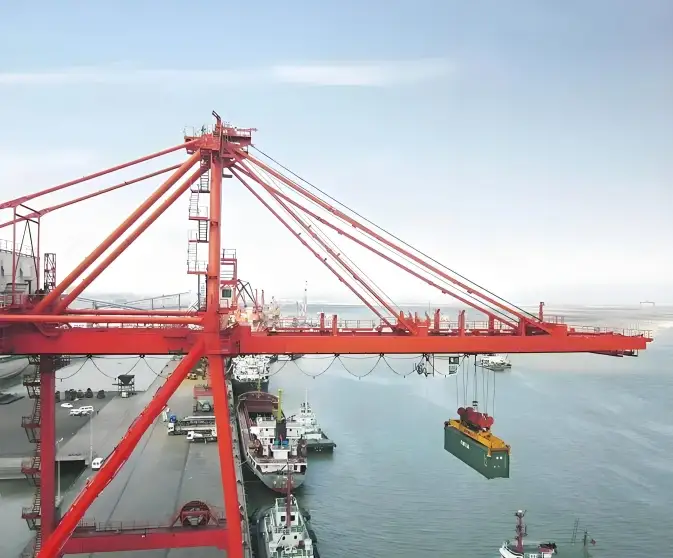
A Ship-to-Shore (STS) Container Crane (also known as a Container Quay Crane) is a massive, rail-mounted gantry crane permanently installed along maritime container terminal wharves. It is designed to lift shipping containers directly between ocean-going vessels and quay-side transport vehicles (chassis/trucks or straddle carriers). Outfitted with an extendable boom arm and telescopic container spreaders (20ft 40ft, 45ft}, and twin/quad lift modes), it serves as the critical primary lifting equipment for container port import and export operations.
APPLICATION SCENARIO
Container Port Terminals: Loading and unloading ultra-large container vessels (ULCVs), Panamax, Post-Panamax, and Feeder ships at seaport quays.
Intermodal Maritime Hubs: Transferring containers directly from ocean vessels onto quay trailers, Automated Guided Vehicles (AGVs), or shuttle carriers for yard transport.
River & Inland Waterway Ports: Handling containerized cargo on inland barges and coastal feeder vessels.
ADVANTAGES
| Advantage Feature | Technical & Operational Value |
| Exceptional Outreach & Clearance | Engineered for Mega-Vessels: Designed with massive outreach booms (up to 70m+) capable of reaching across 24+ container rows on ultra-large vessels with high stack clearances. |
| Ultra-High Handling Speed & Throughput | Fast Operating Cycles: Features high-speed hoisting, trolley travel, and boom gantry movements to achieve maximum container moves per hour (MPH), drastically reducing ship turn-around time in port. |
| Heavy Payload & Dual/Tandem Lift Capacity | Multi-Container Lifting: Supports heavy rated loads (typically 40t to 100t+ under spreader), enabling dual-20ft or tandem 40ft/45ft container lifts in a single hoist cycle. |
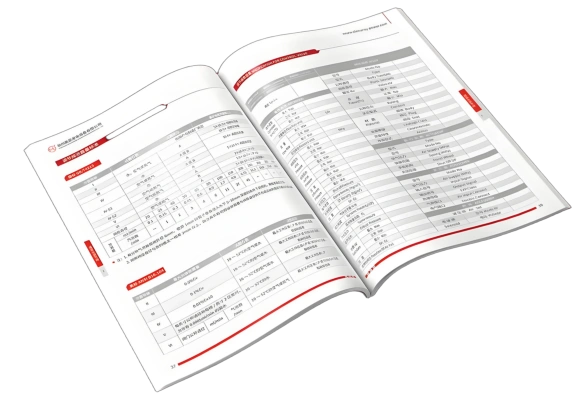
STRUCTURAL DIAGRAM AND PARAMETER TABLE
| Parameter | Specification |
|---|---|
| Working Class | A7, A8 (Heavy to very heavy duty for continuous port operation) |
| Container Capacity | 30 t – 65 t (single lift) 50 t – 100 t (tandem lift, twin 20ft containers) |
| Span | 18 m – 50 m (depending on number of container rows) |
| Lifting Height (Above Rail) | 12 m – 30 m (stacking height: 4 – 10 containers high) |
| Lifting Speed | Fully loaded: 15 – 35 m/min Empty: 30 – 70 m/min |
| Trolley Travelling Speed | 70 – 150 m/min (high-speed for efficient operation) |
| Crane Travelling Speed | 40 – 120 m/min (along quay or yard rail) |
| Control Method | Cabin control (ergonomic design) / Remote radio control / Fully automatic (optional) |
| Power Supply | (customizable) |
| Temperature | -25°C to +45°C |
| Protection Grade | Motors: IP55 – IP56 (marine grade, corrosion resistant), Insulation class F or H Electrical cabinet: IP54 – IP65 (dust/water protected) |
| Girder Type | Double Girder – Box section with full-penetration welding (single or twin box girder) |





 Free Technical Consultation



