


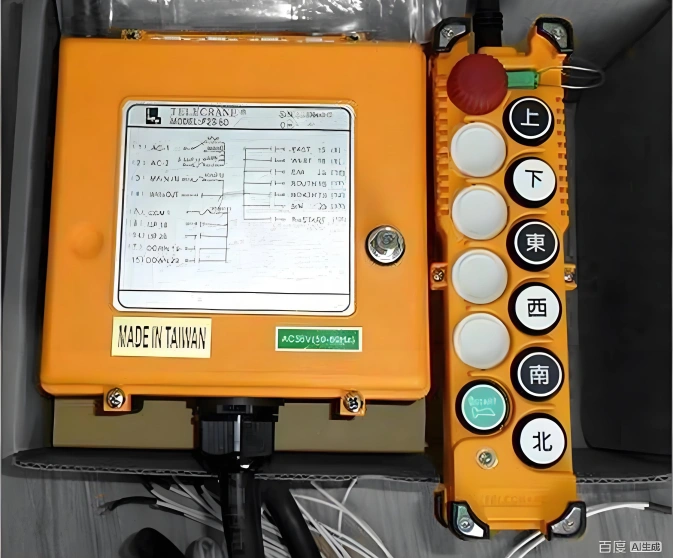
The radio remote control component of the crane
Authentication mark:


This component is mainly used in manufacturing plants, steel mills, and warehouse logistics.
Transmitter Type:
Portable / Waist-mounted / Panel-mounted
Control Points:
4 – 24 control points
Control Range:
50 m – 200 m (standard) / 500 m+ (long-range)
Operating Frequency:
433 MHz / 868 MHz / 915 MHz / 2.4 GHz
Get A Free Quote

WhatsApp
Introduction
Application Scenario
Advantages
Structural Diagram And Parameter Table
INTRODUCTION
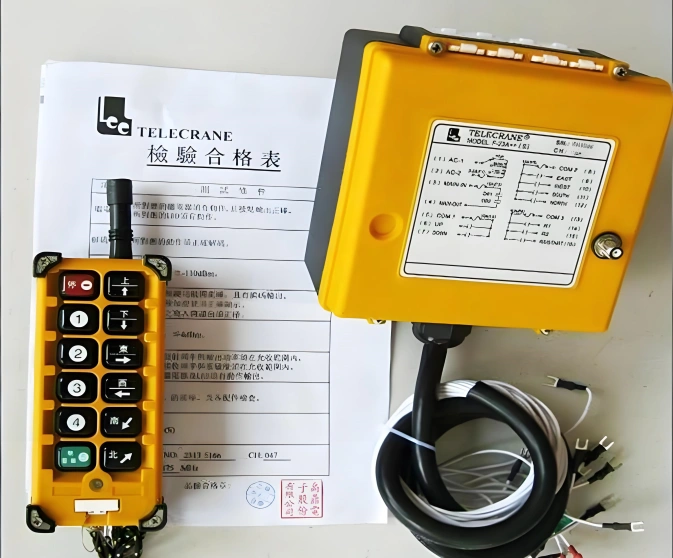
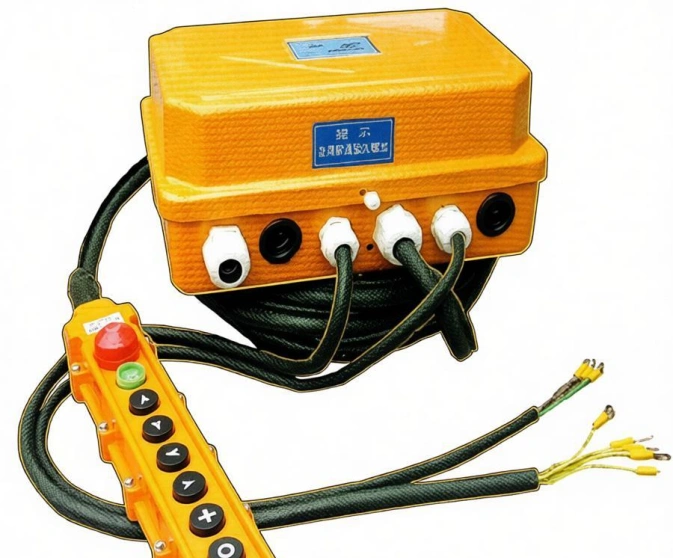
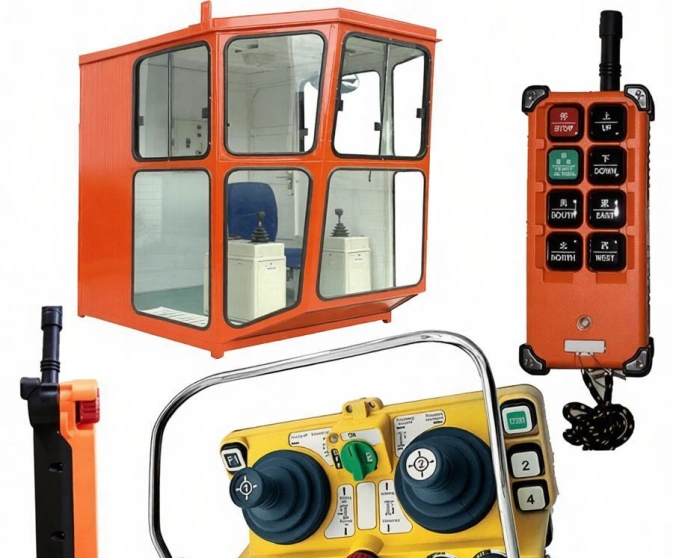
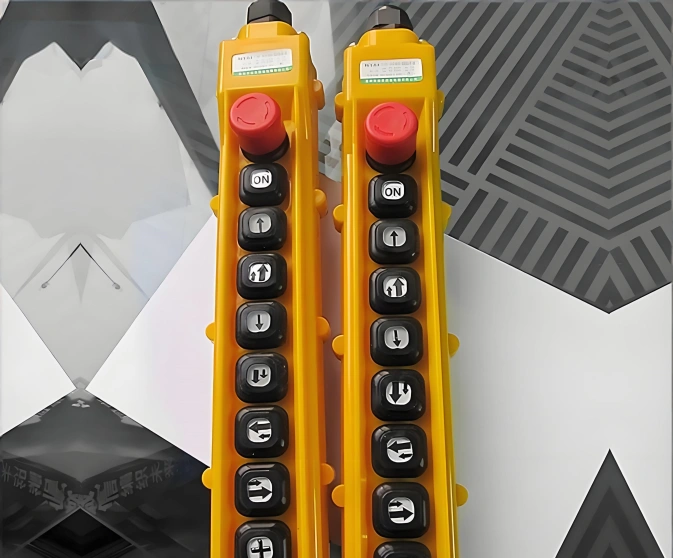
The radio remote control component of the crane consists of a portable transmitter (handheld or body‑worn) and a receiver unit installed on the crane’s electrical panel. It uses encrypted industrial radio frequencies (e.g., 433 MHz, 2.4 GHz) to send control signals for crane motions: hoist up/down, trolley travel, bridge travel, and auxiliary functions. With safety features such as emergency stop, two‑hand control, and frequency hopping, this component replaces pendant cords, freeing operators from cable limitations and improving safety during crane operation.
APPLICATION SCENARIO
[1] Overhead crane operation – Enabling operators to stand at the best viewing angle, away from suspended loads.
[2] Gantry and semi‑gantry cranes – Allowing safe control from outside the crane’s travel path.
[3] Jib crane and hoist workstations – Reducing fatigue and improving precision for repetitive lifts.
[4] Explosion‑hazard environments – With ATEX/IECEx certified remote controls for safe wireless operation.
[5] Multiple crane coordination – Using frequency‑selectable transmitters to control one of several cranes in a shop.
[2] Gantry and semi‑gantry cranes – Allowing safe control from outside the crane’s travel path.
[3] Jib crane and hoist workstations – Reducing fatigue and improving precision for repetitive lifts.
[4] Explosion‑hazard environments – With ATEX/IECEx certified remote controls for safe wireless operation.
[5] Multiple crane coordination – Using frequency‑selectable transmitters to control one of several cranes in a shop.
ADVANTAGES
[1] Improved safety – Operator can stay clear of pinch points, suspended loads, and blind spots.
[2] Enhanced productivity – Faster response, no cable dragging or tripping hazards.
3] Ergonomic and fatigue‑reducing – Lightweight transmitter with large buttons, no physical strain.
[4] Reliable signal – Industrial‑grade anti‑interference, up to 100‑300m range.
[5] Easy installation – Receiver module connects to existing crane control circuit with simple wiring.
[2] Enhanced productivity – Faster response, no cable dragging or tripping hazards.
3] Ergonomic and fatigue‑reducing – Lightweight transmitter with large buttons, no physical strain.
[4] Reliable signal – Industrial‑grade anti‑interference, up to 100‑300m range.
[5] Easy installation – Receiver module connects to existing crane control circuit with simple wiring.
STRUCTURAL DIAGRAM AND PARAMETER TABLE
| Parameter | Specification |
|---|---|
| Transmitter Type | Portable / Waist-mounted / Panel-mounted |
| Control Points | 4 – 24 control points |
| Control Range | 50 m – 200 m |
| Operating Frequency | 433 MHz / 868 MHz / 915 MHz / 2.4 GHz |









 Free Technical Consultation



