


ELECTRIC HOIST
- Wire Rope Hoist
- Chain Hoist
- Other Electric Hoists
HOT PRODUCTS
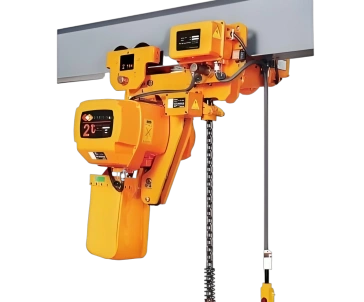
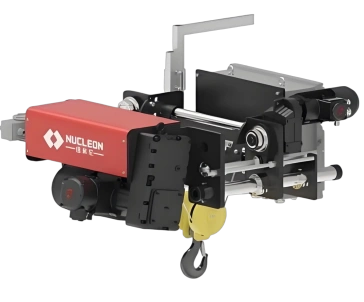
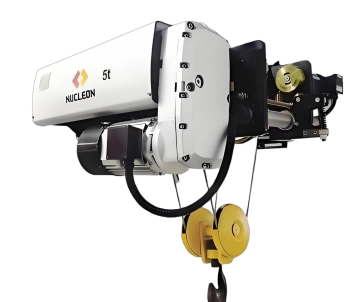
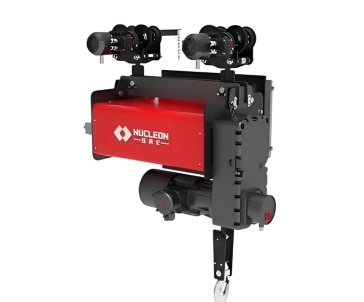
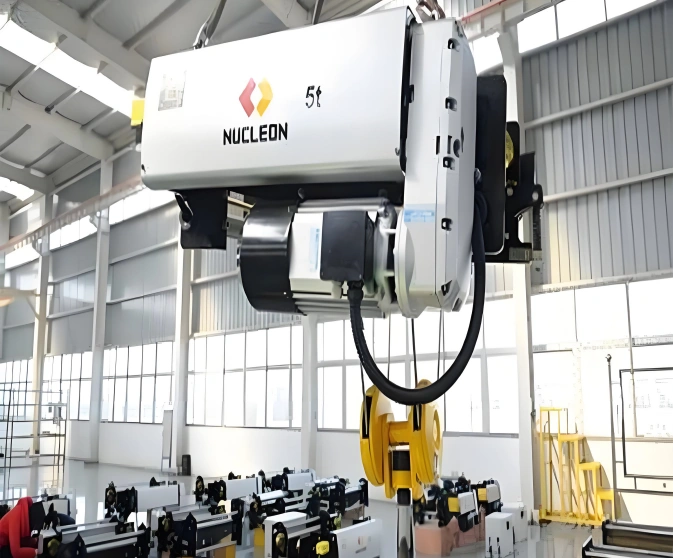
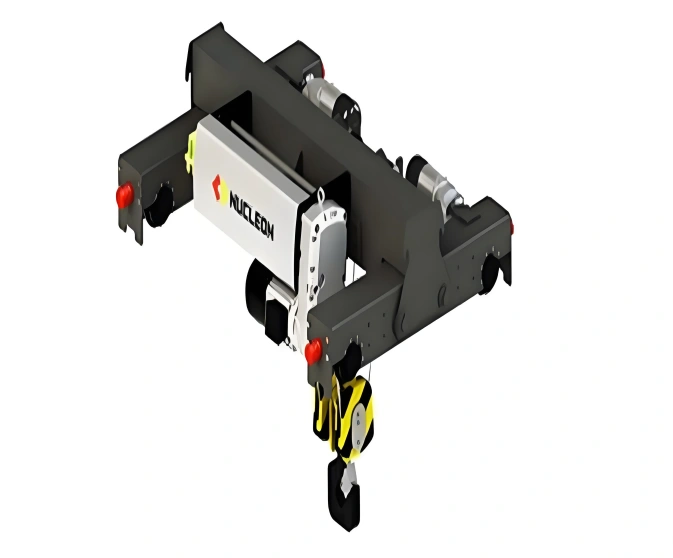
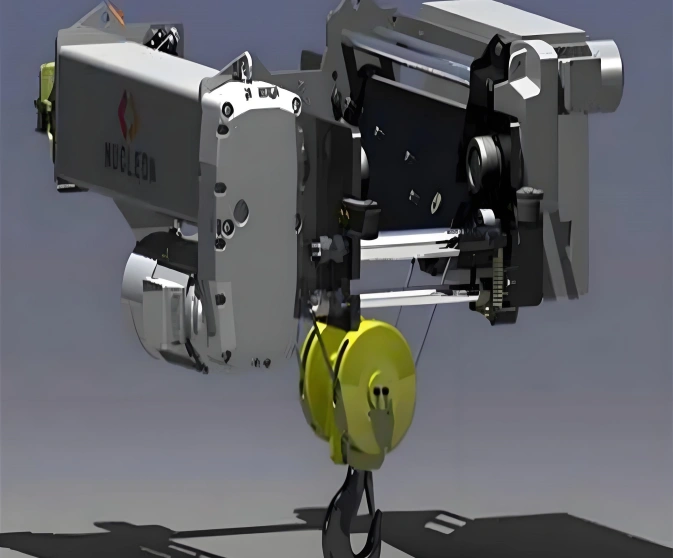
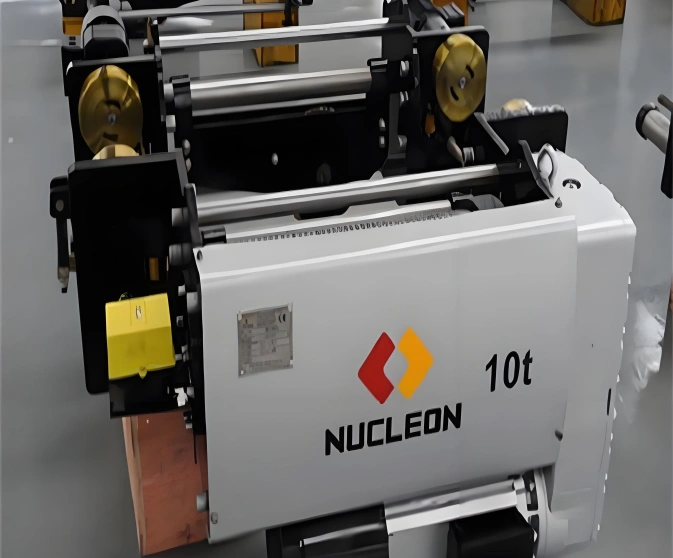
Cart-type electric hoist
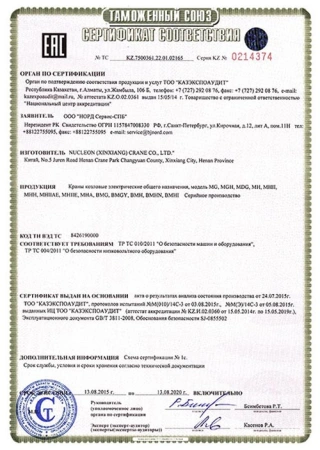
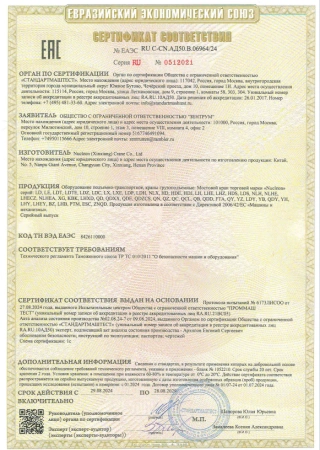
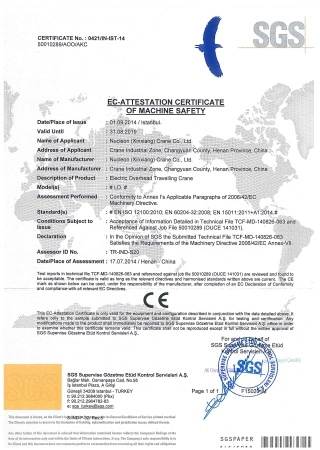
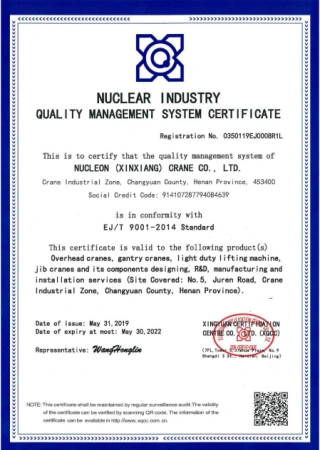
Authentication mark:


This hoist is mainly used in manufacturing workshops, warehouse loading areas, and maintenance facilities.
Capacity:
0.25 ton – 20 tons (Common: 0.25t, 0.5t, 1t, 2t, 3t, 5t, 10t, 16t, 20t)
Lifting Height:
3 m – 6 m (Customizable up to 30 m)
Voltage/Hertz:
3-phase 380V / 50Hz (Customizable to 200V-600V)
Working Class:
M3 – M5 (FEM/ISO)
Get A Free Quote

WhatsApp
Introduction
Application Scenario
Advantages
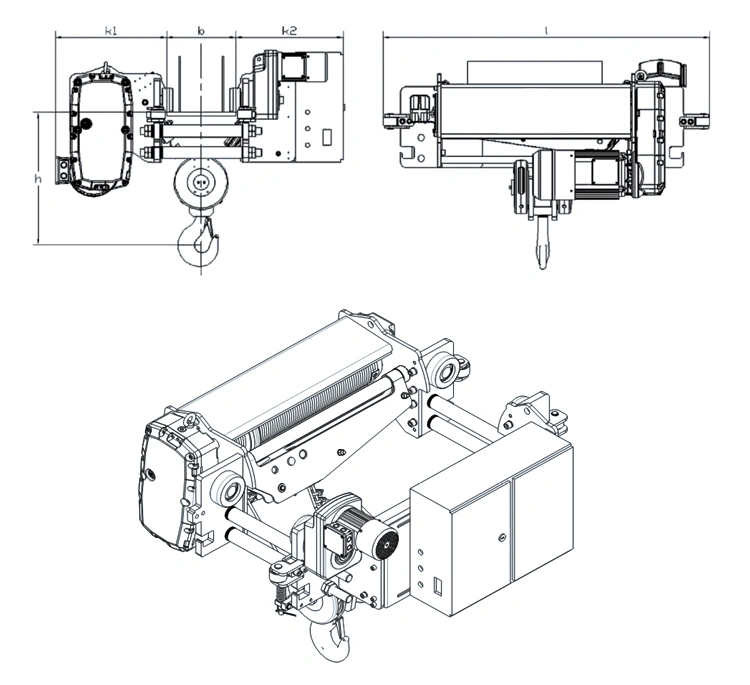
Structural Diagram And Parameter Table
INTRODUCTION
What is this?
The cart-type electric hoist is an electric lifting device that integrates an electric hoist with a traveling trolley. Through the lifting and lowering of the electric hoist and the left/right movement of the trolley along an I-beam rail, combined with the rail layout, it achieves fast lifting and horizontal handling of materials. If you are looking for an electric lifting tool that can both lift and move horizontally for a production line, assembly line, warehouse, or maintenance workstation, this product is designed for you.
Why choose a cart-type electric hoist over a fixed type electric hoist?
Compared to fixed type electric hoists, the cart-type electric hoist offers four core advantages:
First, wider coverage – the electric hoist can move left and right along the rail, with a single device covering all workstations within the entire rail length.
Second, higher operational efficiency – no need to move workpieces or operator position, the electric hoist moves directly to the target position for lifting, saving time and labor.
Third, more flexible installation – rails can be arranged arbitrarily according to workstation layout, supporting straight lines, curves, multi-branch, and other complex routes, with strong adaptability.
Fourth, one machine for multiple uses – a single cart-type electric hoist can serve multiple workstations or loading/unloading points, with high equipment utilization and fast return on investment.
Expand the coverage of a single device with a movable design.
What can we do for you?
We understand that every customer has different capacity requirements, different rail layouts, and different lifting heights. Therefore, we offer flexible customization options: lifting capacity from 0.25 ton to 10 tons; lifting height from 3 meters to 30 meters; traveling speed options of single speed or VVVF speed control; control options of pendant or remote radio; rail types of straight line, curved line, or multi-branch; power supply options of cable trolley or cable reel. Whether your workstations are arranged in a straight line or a complex layout, we can match the most suitable travel solution and lifting capacity.
Unsure? Don't know?
Not sure whether to choose a cart-type or fixed type? Not sure how long the rail needs to be and what traveling speed is required? No problem. Just tell us: your maximum lifting weight, your required lifting height, and the length and layout of the working area to be covered. Our engineers will provide you with an accurate quote and rail layout drawings within 24 hours. Click the button below or contact us via WhatsApp/email to get your customized solution.
💡 Tip: We offer free selection consulting. Even if you are unsure about specific parameters, feel free to describe your workstation layout and handling needs, and we will calculate for you.
The cart-type electric hoist is an electric lifting device that integrates an electric hoist with a traveling trolley. Through the lifting and lowering of the electric hoist and the left/right movement of the trolley along an I-beam rail, combined with the rail layout, it achieves fast lifting and horizontal handling of materials. If you are looking for an electric lifting tool that can both lift and move horizontally for a production line, assembly line, warehouse, or maintenance workstation, this product is designed for you.
Why choose a cart-type electric hoist over a fixed type electric hoist?
Compared to fixed type electric hoists, the cart-type electric hoist offers four core advantages:
First, wider coverage – the electric hoist can move left and right along the rail, with a single device covering all workstations within the entire rail length.
Second, higher operational efficiency – no need to move workpieces or operator position, the electric hoist moves directly to the target position for lifting, saving time and labor.
Third, more flexible installation – rails can be arranged arbitrarily according to workstation layout, supporting straight lines, curves, multi-branch, and other complex routes, with strong adaptability.
Fourth, one machine for multiple uses – a single cart-type electric hoist can serve multiple workstations or loading/unloading points, with high equipment utilization and fast return on investment.
Expand the coverage of a single device with a movable design.
What can we do for you?
We understand that every customer has different capacity requirements, different rail layouts, and different lifting heights. Therefore, we offer flexible customization options: lifting capacity from 0.25 ton to 10 tons; lifting height from 3 meters to 30 meters; traveling speed options of single speed or VVVF speed control; control options of pendant or remote radio; rail types of straight line, curved line, or multi-branch; power supply options of cable trolley or cable reel. Whether your workstations are arranged in a straight line or a complex layout, we can match the most suitable travel solution and lifting capacity.
Unsure? Don't know?
Not sure whether to choose a cart-type or fixed type? Not sure how long the rail needs to be and what traveling speed is required? No problem. Just tell us: your maximum lifting weight, your required lifting height, and the length and layout of the working area to be covered. Our engineers will provide you with an accurate quote and rail layout drawings within 24 hours. Click the button below or contact us via WhatsApp/email to get your customized solution.
💡 Tip: We offer free selection consulting. Even if you are unsure about specific parameters, feel free to describe your workstation layout and handling needs, and we will calculate for you.
APPLICATION SCENARIO
[1] Workshop Workstations – Lifting tools, dies, and workpieces for machining or assembly.
[2] Warehouse Loading Bays – Moving heavy boxes, pallets, or equipment along a track.
[3] Production Lines – Feeding components between adjacent stations with controlled horizontal travel.
[4] Maintenance Areas – Hoisting engines, pumps, or spare parts along a service bay.
[5] Inspection and Testing Labs – Positioning heavy test samples under testing machines.
[2] Warehouse Loading Bays – Moving heavy boxes, pallets, or equipment along a track.
[3] Production Lines – Feeding components between adjacent stations with controlled horizontal travel.
[4] Maintenance Areas – Hoisting engines, pumps, or spare parts along a service bay.
[5] Inspection and Testing Labs – Positioning heavy test samples under testing machines.
ADVANTAGES
[1] Compact and Space‑Saving – No need for a full bridge crane; uses existing I‑beams.
[2] Easy Installation – Mounts directly on runway with minimal structural modification.
[3] Smooth Two‑Axis Movement – Electric trolley travel plus hoist lift for precise positioning.
[4] Low Cost – More economical than a complete overhead crane system.
[5] Low Maintenance – Sealed motor and durable wheels with sealed bearings.
[2] Easy Installation – Mounts directly on runway with minimal structural modification.
[3] Smooth Two‑Axis Movement – Electric trolley travel plus hoist lift for precise positioning.
[4] Low Cost – More economical than a complete overhead crane system.
[5] Low Maintenance – Sealed motor and durable wheels with sealed bearings.
STRUCTURAL DIAGRAM AND PARAMETER TABLE
| Parameter | Specification |
|---|---|
| Rated Capacity | 0.25 ton – 20 tons (Common: 0.25t, 0.5t, 1t, 2t, 3t, 5t, 10t, 16t, 20t) |
| Standard Lifting Height | 3 m – 6 m (Customizable up to 30 m) |
| Lifting Speed | Single speed: 4 – 8 m/min; Dual speed: 0.8/8 – 0.8/5.4 m/min |
| Traveling Speed | 11 – 22 m/min (Dual speed optional: 7/22 m/min) |
| Traveling Motor Power | 0.07 kW – 0.75 kW (Increases with capacity)0.07 kW – 0.75 kW (Increases with capacity) |
| Working Class | M3 – M5 (FEM/ISO) |
| Duty Cycle | 40% – 50% ED |
| Load Chain Falls | 1 – 8 (Increases with capacity) |
| Load Chain Diameter | 4.3mm – 11.2mm (Grade 80 high-strength alloy steel chain) |
| Applicable Beam Width | 52mm – 178mm (Adjustable) |
| Minimum Curve Radius | 0.8 m – 1.8 m (For curved track) |
| Power Supply | 3-phase 380V / 50Hz (Customizable to 200V-600V) |
| Motor Protection Grade | IP54 – IP55 |
| Motor Insulation Class | Class F |
| Control Method | Pendant control / Remote radio control |
| Operating Temperature | -20℃ to +40℃ |





 Free Technical Consultation



