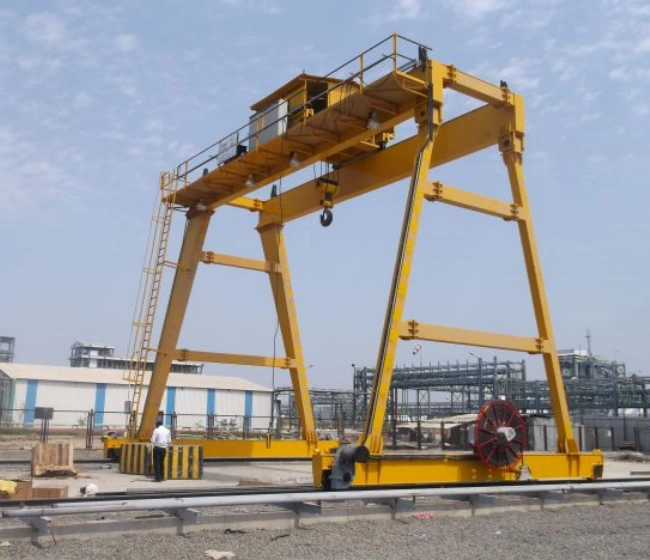
Double Trolley Gantry Crane for Long Loads – The Complete Guide to Safe & Efficient Lifting
Handling long loads—such as steel beams, precast concrete girders, pipes, wind turbine blades, and shipbuilding sections—presents unique challenges in industrial material handling. Unlike compact loads that can be lifted from a single point, long loads require specialized equipment and techniques to prevent bending, twisting, or unstable swinging. This is where the gantry crane for long loads becomes an indispensable solution across construction sites, stockyards, manufacturing facilities, and shipyards worldwide.
What Is a Gantry Crane for Long Loads?
A gantry crane for long loads is a heavy-duty lifting system specifically designed to handle exceptionally long, heavy, and cumbersome materials with stability and precision. Unlike standard single-point lifting cranes, these systems provide multiple lifting points that keep the load level and balanced throughout the entire lifting operation.
The most advanced configuration is the double trolley gantry crane, which features two independently controlled yet synchronizable hoist trolleys operating on the same set of rails. This dual-trolley configuration provides two stable lifting points, making it the ideal system for safely maneuvering long pipes, girders, blades, and prefabricated sections.
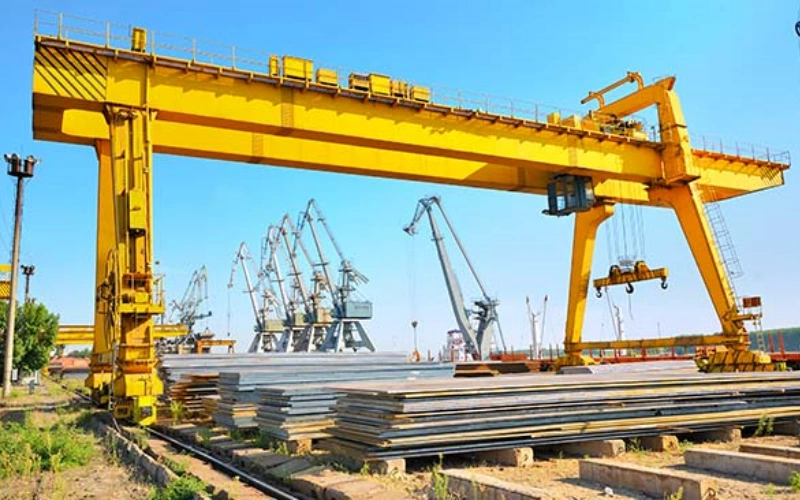
Key Methods for Lifting Long Loads with a Gantry Crane
1. Double Trolley Synchronized Lifting
The most effective way to lift long loads with a gantry crane is using a double trolley system with synchronized control. Both trolleys lift the load simultaneously at the same speed, keeping it level throughout the movement. This coordination prevents tilting or twisting that could damage the load or compromise safety.
Key advantages of double trolley systems:
Superior stability – Two distinct lifting points prevent load rotation and bending
Synchronized and independent control – Trolleys can operate in perfect synchronization or independently for complex maneuvers
Precision handling with VFD – Variable Frequency Drives provide smooth, stepless speed control for precise positioning
2. Tandem Lifting with Two Gantry Cranes
When a single gantry crane for long loads is insufficient, tandem lifting with two cranes offers an alternative solution. In a tandem lift, two cranes work together to lift a long load from both ends.
Critical considerations for tandem lifting:
Both cranes should lift at the same time and speed to keep the load level
Fine-tune hoist tension to match weight distribution and avoid stressing corners or edges
Precise coordination is essential—misalignment can cause cracks, warping, or safety hazards
3. Spreader Beam and Lifting Frame Method
Instead of relying solely on two hoists, a spreader beam or lifting frame suspended from one or more hoists provides another approach to gantry crane long load lifting. The spreader beam distributes the load weight evenly across multiple attachment points, reducing stress on the load and the crane.
4. Double Hoist on Single Trolley
A single trolley equipped with two hoists offers a compact solution for lifting long loads with a gantry crane. Both hoists move together on the same trolley, giving operators precise control over load balance without the complexity of coordinating two separate trolleys.
Applications of Gantry Crane Long Load Lifting
The gantry crane for long loads finds critical applications across numerous industries:
Precast Concrete and Bridge Girder Yards – Lifting and transporting long concrete beams, bridge girders, and T-beams with complete stability
Steel Pipe and Structural Beam Manufacturing – Handling long steel pipes, H-beams, and other structural sections
Wind Turbine Blade Handling – Providing stable, wide-based support for long and delicate blades
Shipbuilding – Lifting and positioning long hull sections, masts, and large components
Lumber and Timber Yards – Efficiently handling long logs and bundled lumber
Technical Specifications
Safety Considerations for Gantry Crane Long Load Lifting
Safety is paramount when lifting long loads with a gantry crane:
Center of Gravity Awareness – Side-shifting has the potential to overload a gantry leg, even if the total load is within the crane‘s capacity. The longer the beam or object, the larger this unwanted effect becomes.
Load Balance – Uneven lifting increases stress on the crane and the load. A poorly balanced lift can cause the load to swing or create hazards for operators.
Regular Inspections – Frequently inspect the gantry crane for bent, broken, corroded, cracked, damaged, or missing parts. Ensure the load is not attached to the floor and remove any obstacles that may impede lifting.
Personnel Safety – Never lift, lower, or transport a load until all personnel are clear of the load and its path. Raise the load high enough to clear obstacles in one smooth motion, avoiding abrupt moves.
How to Select the Right Gantry Crane for Long Loads
When choosing a gantry crane for long loads, consider:
Load Length and Weight – Determine the maximum length and weight of materials you need to handle
Lifting Points Required – Decide between double trolley, tandem lift, or spreader beam configurations
Operating Environment – Indoor or outdoor use, temperature range, and weather conditions
Automation Level – Manual, semi-automatic, or fully automated control
Compliance Standards – Ensure CE, ISO, or other relevant certifications
QZ Type Overhead Crane with Grab Bucket – The Ultimate Solution for Bulk Material Handling
none