Gantry Crane vs. Overhead Crane: Which Is Cheaper? Get the Numbers Right and Avoid Wasting Money
In factories, ports, freight yards, or construction sites, cost is often one of the key decision factors when selecting lifting equipment. Many customers ask: "Between a gantry crane and an overhead crane, which one is actually cheaper?"
As a lifting equipment supplier with years of experience serving thousands of businesses, we'll give you a straightforward answer: For the same lifting capacity and span, the initial purchase cost of a gantry crane is typically 20%–40% higher than that of an overhead crane. But be aware — "cheaper" does not mean "more cost-effective." Choosing the wrong equipment can lead to far higher costs later due to foundation, rail installation, and maintenance expenses.
Let's break this down from three perspectives.
1. Direct Purchase Price: Gantry Crane Costs More, Overhead Crane Costs Less
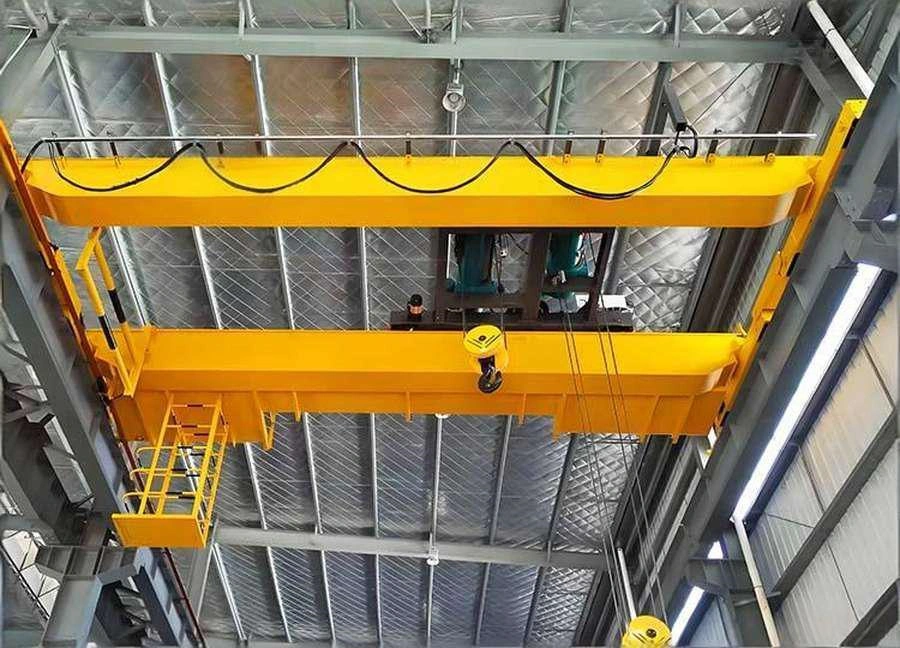
Overhead crane: The structure is relatively compact. Components like the main beam, end trucks, trolley, and electrical system are highly standardized. It needs to be installed on a building's load-bearing crane beams and does not require a ground-based travel mechanism. Therefore, material costs and manufacturing complexity are lower. A standard 10-ton, 22.5m-span overhead crane typically costs between RMB 30,000 and 60,000.
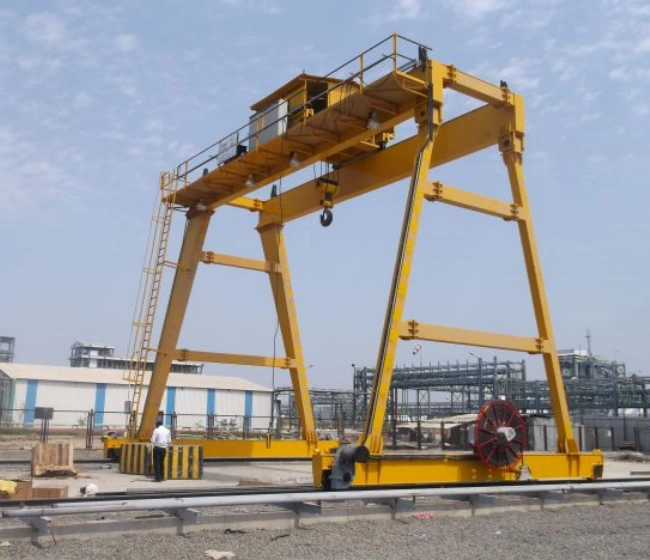
Gantry crane: It has two "long legs" and a complete ground travel mechanism (including wheel sets, equalizing beams, cable reels or conductor bars, etc.). Steel consumption increases significantly, the structure is more complex, and both manufacturing and transportation costs are higher. A similarly specced simple gantry crane (10t, 22.5m span) often costs RMB 60,000–120,000. If it includes cantilevers or a fully box-girder structure, the price goes even higher.
Conclusion: Looking only at equipment price, the overhead crane is clearly cheaper.
2. Hidden Costs: Foundation and Installation Expenses
Whether something is "cheap" depends on more than just the equipment itself.
Overhead crane: Requires corbel columns, crane beams, and an industrial building. If you don't have an existing heavy-duty factory building, constructing a new one can cost thousands of RMB per square meter — far more than the crane itself. Many customers end up choosing a gantry crane simply because their site lacks the necessary building structure.
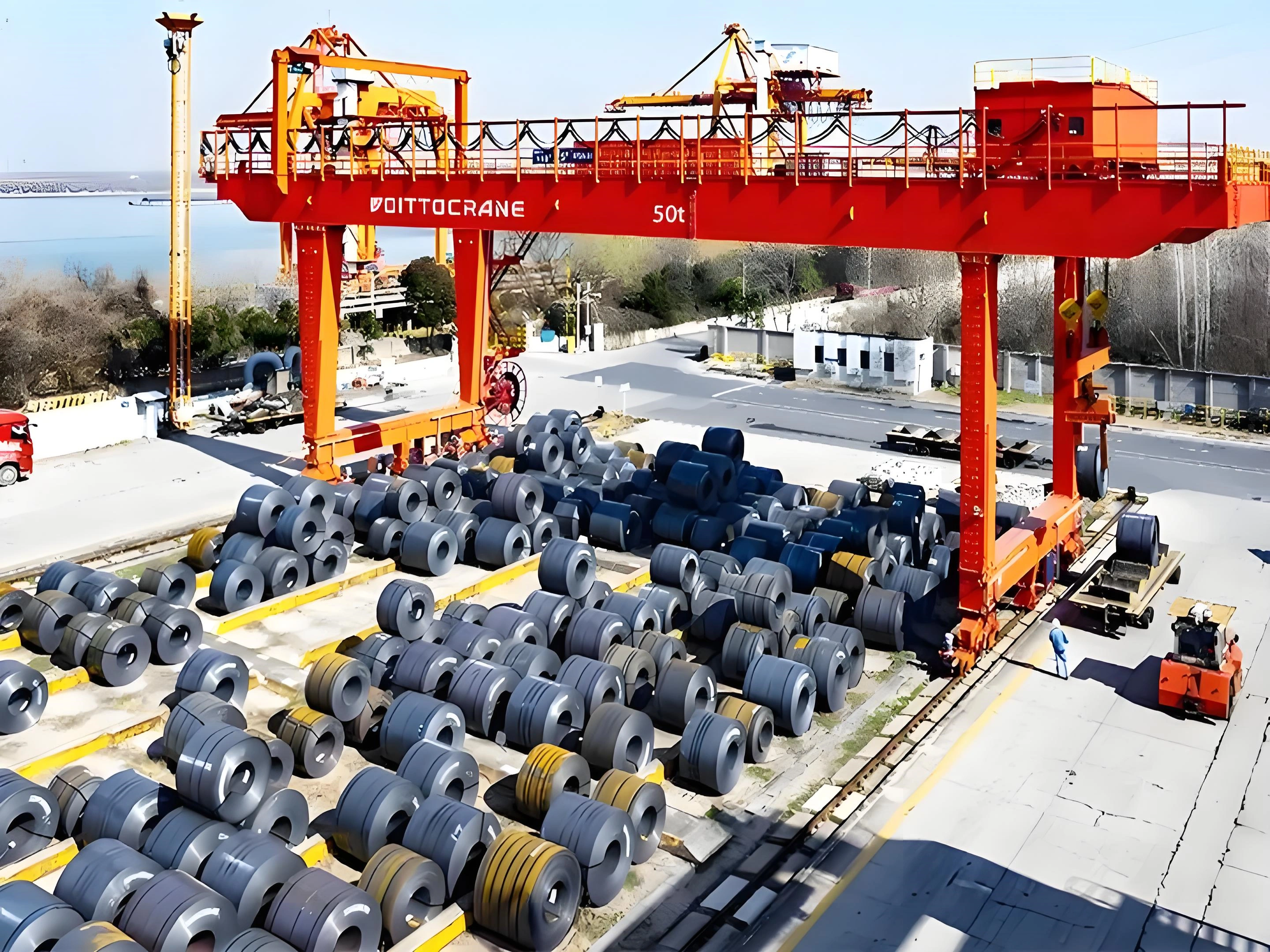
Gantry crane: Does not require a load-bearing building. It only needs a flat concrete ground or two steel rails. The cost of ground foundation work is much lower than building an entire heavy steel structure. This is especially true for outdoor storage yards, stockpiles, and docks — just lay the rails and you're ready.
Real case: A steel market needed to lift 10 tons of steel. Building a factory plus an overhead crane would cost about RMB 1.2 million. Laying rails plus a gantry crane cost only RMB 450,000. In this scenario, the gantry crane turned out to be "cheaper."
3. Application Scenarios Determine True Cost-Effectiveness
Choose an overhead crane when: You already have a standard industrial building with crane beams that meet installation requirements. In this case, just buy the overhead crane + runway rails + conductor bars — total cost is lowest, operation is stable, and maintenance is simple.
Choose a gantry crane when:
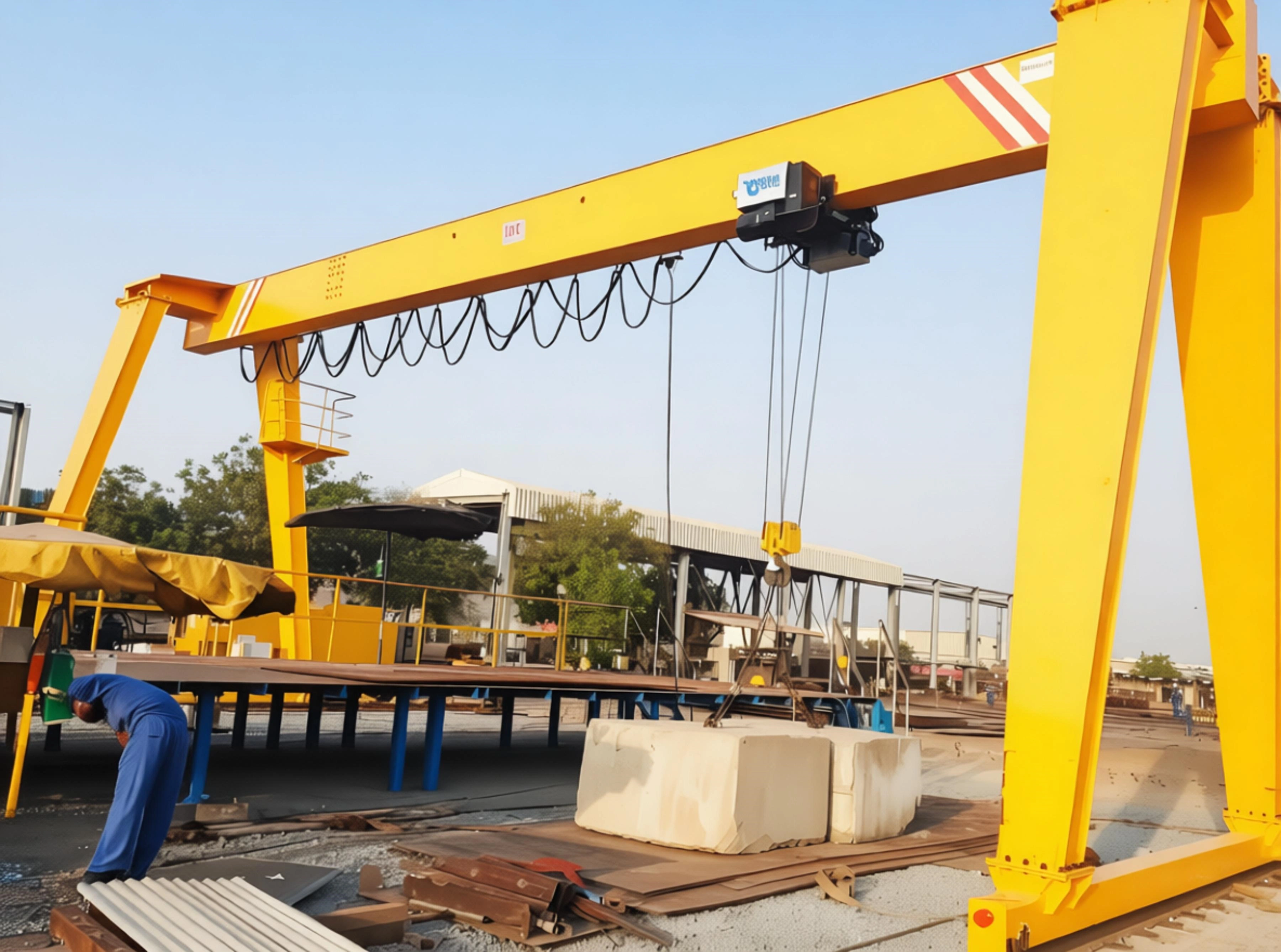
Working outdoors (storage yards, stockpiles, docks)
No building exists, or the building height/load capacity is insufficient
You need to frequently change work locations (tire-mounted gantry cranes)
Spanning large areas (e.g., precast concrete beam yards)
4. Maintenance and Service Life
Overhead cranes operate indoors, protected from rain and wind. Electrical components last longer, with annual maintenance costs around 3%–5% of equipment price.
Gantry cranes operate outdoors. Wheels, gearboxes, electrical parts, and wind-proof devices age faster. Annual maintenance costs run about 5%–8% of equipment price.
Over the full lifecycle, overhead cranes generally have lower total cost — but only if you have a suitable building.
Bottom Line:
There is no absolute "cheaper" crane type — only the solution that best fits your conditions.
Have a building → overhead crane is cheaper. No building / outdoor work → gantry crane may have a much lower total cost.
✅ Want an accurate proposal and price quote? Leave your email.
Every customer's situation is different: lifting capacity, span, rail length, indoor/outdoor, existing building, budget — all of these variables affect the true cost comparison.
We've prepared a "Gantry vs. Overhead Crane Selection Comparison Table" and a "Cost Calculation Model for Different Working Conditions" to help you accurately determine which crane type is actually cheaper for you.
👉 Leave your email in the comments below, or send us a private message. We'll send you the documents within 2 hours, along with a free initial equipment selection and budget estimate.
10 Ton Overhead Crane Cost: Single vs. Double Girder