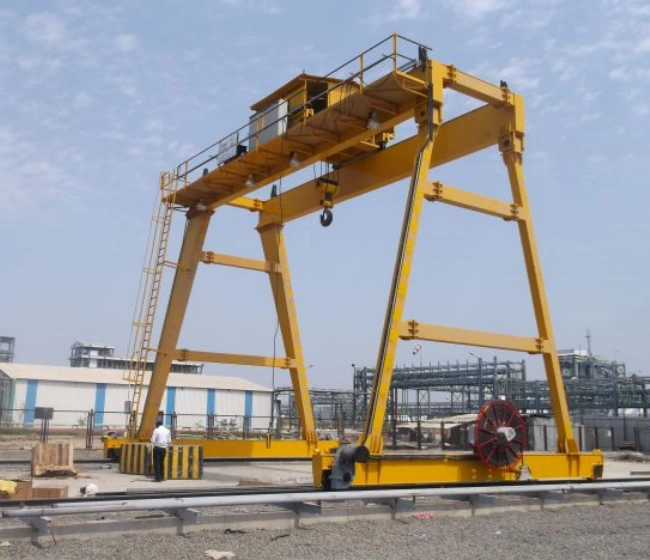
Single Girder vs Double Girder Overhead Crane: More Than Just “One Extra Beam
In factories, warehouses, logistics centers, and heavy industrial sites, the overhead crane is one of the most common lifting devices. But the most basic — and often confusing — question during selection is:
Should I choose a single-girder or a double-girder overhead crane?
Many people think it’s simply about adding “one extra beam.” But in reality, the differences in structural design, lifting capacity, span, stability, purchase cost, and maintenance complexity are significant. Choosing the wrong type can lead to wasted investment, reduced productivity, or even safety risks.
This article provides a systematic comparison between single-girder and double-girder overhead cranes across 8 key technical dimensions, helping you make a more informed and economical decision.
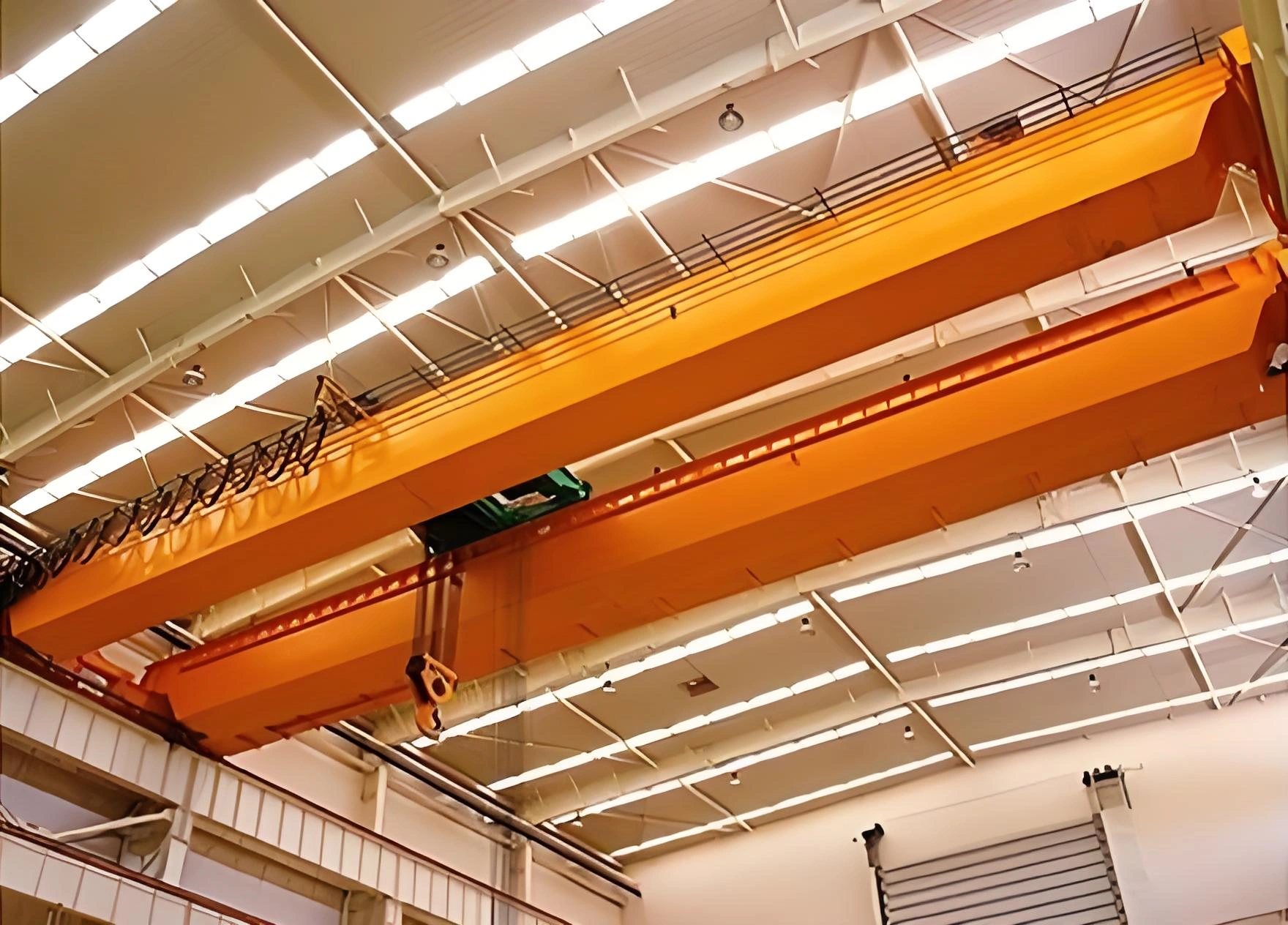
2. What is a Single-Girder Overhead Crane?
Definition:
A structure with a single main beam (usually I-beam or box girder), where an electric hoist runs on the flange of the main beam.
Typical Components:
One main girder
Two end carriages
Electric hoist
Bridge travel mechanism
Typical Applications:
Lifting capacity ≤ 20 tons (recommended ≤ 10 tons)
Span ≤ 22.5 m
Light to medium duty, intermittent operation
3. What is a Double-Girder Overhead Crane?
Definition:
A structure with two main girders, where a lifting trolley (with hoist and cross-travel mechanism) runs on rails fixed on top of the main girders.
Typical Components:
Two main girders
Two end carriages
Lifting trolley (hoist + cross-travel)
Bridge travel mechanism
Typical Applications:
Lifting capacity ≥ 5 tons (typically 10–500 tons)
Large span (up to 30 m or more)
Heavy duty, continuous, high-frequency operation
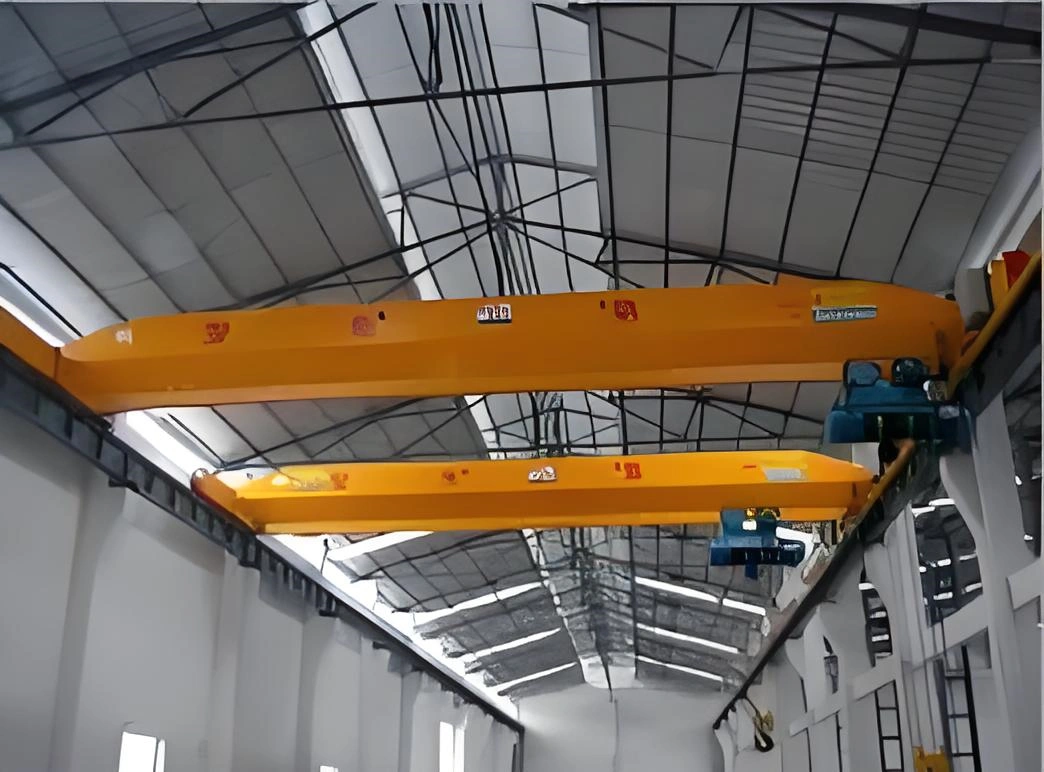
4. Key Differences Between Single and Double Girder Overhead Cranes
| Feature | Single Girder Crane | Double Girder Crane |
|---|---|---|
| Number of main girders | 1 | 2 |
| Lifting mechanism | Electric hoist | Trolley (with hoist) |
| Typical capacity | 1–20 tons | 5–500 tons |
| Maximum span | ≤ 22.5 m | ≥ 30 m |
| Self weight | Lighter | Heavier |
| Required building height | Lower | Higher |
| Purchase cost | Lower (saves 20–30%) | Higher |
| Operational stability | Moderate | Excellent |
| Hook height utilization | Lower (hoist takes space) | Higher |
| Maintenance complexity | Simple | Moderate to complex |
| Service life | Moderate | Longer |
5. Selection Guide: When to Choose Single vs Double Girder
✅ Prefer a Single-Girder Overhead Crane when:
Capacity ≤ 10 tons
Budget is limited
Building height is low
Low operating frequency (maintenance, occasional loading/unloading)
Moderate lifting speed is acceptable
✅ Prefer a Double-Girder Overhead Crane when:
Capacity ≥ 10 tons (especially ≥ 20 tons)
Span exceeds 22 m
High-frequency or continuous operation required
Higher hook height is needed
Using specialized attachments (grabs, electromagnets, etc.)
Long-term stability and lower failure rate are priorities
6. Common Misconceptions (Useful for Google’s “People also ask”)
❌ Myth 1: Double girder is always better than single girder
✅ Not necessarily. For capacity under 10 tons and short spans, single girder offers better value.
❌ Myth 2: A single girder is just a double girder minus one beam
✅ Not true. The structures are fundamentally different: hoist runs under the beam in single-girder, while a trolley runs on top of the beams in double-girder designs.
❌ Myth 3: Single-girder cranes cannot be VFD-controlled
✅ They can. Single-girder cranes support VFD, remote control, anti-sway, and other advanced features.
7. Conclusion
Single-girder overhead crane → Best for light to medium duty, low frequency, short spans, and budget-sensitive applications.
Double-girder overhead crane → Best for heavy duty, high frequency, large spans, and long-service-life industrial environments.
The core of crane selection is not “which is better,” but which is more suitable for your actual operating conditions.
8. Frequently Asked Questions (Good for SEO featured snippets)
Q: Which is safer – single or double girder?
A: Both are safe when properly selected and installed. Double-girder offers higher stability margins for heavy loads and long spans.
Q: Can I convert a single-girder crane to a double-girder crane?
A: Generally not recommended. The main girders, end carriages, and travel mechanisms are too different — conversion cost is close to buying a new crane.
Q: What is the typical price difference?
A: For the same specification (e.g., 10 tons, 15 m span), a double-girder crane is usually 30–50% more expensive than a single-girder crane.