What Is a Semi Gantry Crane? Definition, Differences, Advantages & Application Scenarios
Nowadays, global industrial purchasers and overseas business clients are constantly searching for stable, cost-effective lifting solutions. A large number of factory owners face two common troubles: limited indoor working space and tight budgets for infrastructure renovation and hoisting equipment upgrading. Under such practical circumstances, semi gantry cranes have gradually become the most preferred lifting machinery among international buyers.
However, many industry beginners and new procurement staff often mix up semi gantry cranes with overhead traveling cranes and full gantry cranes. They cannot tell apart their structural differences, functional features and applicable working occasions, resulting in improper equipment selection and unnecessary cost waste. This practical guide will give you a full and easy-to-understand introduction to semi gantry cranes, helping you make wise purchasing decisions quickly.
Basic Definition of Semi Gantry Crane
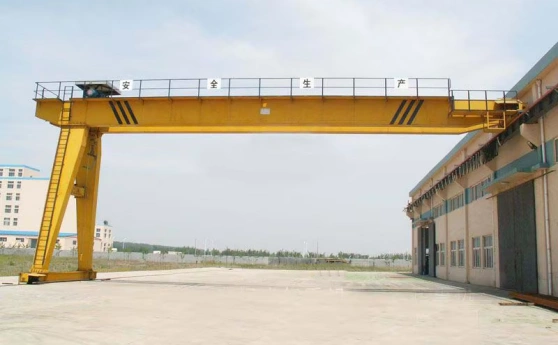
As a practical and lightweight hoisting machine derived from standard gantry cranes, the semi gantry crane combines the design merits of overhead cranes and full gantry cranes perfectly. It is specially customized for modern factories, warehouses and processing workshops that have narrow working areas and restricted construction investment.
Its external structure is highly recognizable in actual use. One side of the whole crane is fixed and supported by factory wall surfaces or embedded steel columns, moving steadily along wall-mounted running tracks. The other side is equipped with an independent single support leg that lands on the ground and operates matching ground rails. Different from full gantry cranes with double-side ground supporting legs, it features lighter overall weight, simpler layout and much more convenient on-site installation work.
Core Differences Between Semi Gantry Crane, Overhead Crane and Full Gantry Crane
| Crane Category | Main Structural Characteristics | On-site Installation Requirements | Cost Input & Installation Difficulty | Best Suitable Working Scenarios |
|---|---|---|---|---|
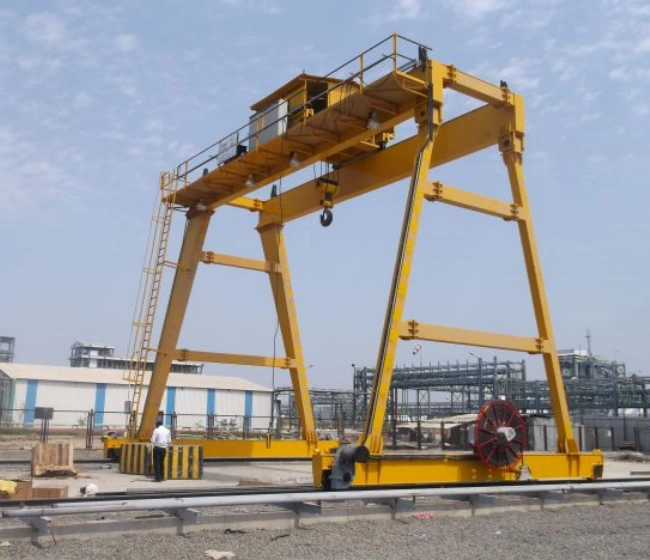
| Overhead Crane | Entire equipment is fully suspended on the top running beams inside workshops without any ground supporting legs | Strict requirements for factory building bearing structure; pre-installed heavy-duty roof load-bearing beams are essential, not fit for old-style workshops without reserved supporting structures | High total equipment procurement cost; roof structure reconstruction is required with complicated construction procedures, long installation cycle and high comprehensive construction expenses | New standardized large factories, indoor heavy-load long-term hoisting operations; not recommended for old workshops and small compact working areas |
| Full Gantry Crane | Adopts double-sided independent ground support legs, matched with complete ground rail systems and fully self-supporting structure | Occupies large-area ground space, demands wide and flat working grounds; will seriously squeeze internal operation and storage space when placed indoors | High raw material consumption leads to high equipment price; strict requirements for ground foundation reinforcement, large installation occupied area and huge early-stage investment cost | Open-air storage yards, port terminals, large outdoor processing sites and other spacious venues; low cost performance for indoor working deployment |
| Semi Gantry Crane | Single-side wall column support plus single ground support leg, compact and lightweight integrated structure | Low demand for building overall bearing capacity; only basic bearing strength is needed on one-side wall or steel columns, compatible with both old workshops and narrow confined spaces | Reasonable and affordable equipment price; no large-scale factory reconstruction or deep ground foundation digging is needed, fast installation progress, short construction period and outstanding overall cost performance | Medium and small processing workshops, compact storage warehouses, flexible indoor and outdoor dual-purpose hoisting work, all kinds of narrow and limited working sites |
In short, the semi gantry crane effectively integrates the strengths of overhead cranes and full gantry cranes while avoiding their respective usage defects. It is tailor-made for users who have small working space and pursue low-budget stable hoisting work, which is also the key reason why it keeps high sales volume and good reputation in the global foreign trade lifting equipment market.
Outstanding Core Advantages of Semi Gantry Cranes
1. Space-saving Layout Design
Space optimization is the most prominent core strength of semi gantry cranes. By making full use of existing factory wall and steel column structures for unilateral bearing support, it will not occupy valuable ground passage space. Daily goods stacking in warehouses and assembly line normal production in workshops will not be affected at all, making it the ideal hoisting tool for all kinds of narrow and crowded working sites.
2. Simple & Fast Installation Process
Compared with full gantry cranes that need deep ground foundation laying and overhead cranes requiring top bearing structure transformation, semi gantry cranes have extremely short construction cycles. After equipment delivery, workers can finish assembly and commissioning in a short time and put it into formal use immediately, without delaying the daily normal production and warehousing operation schedule of enterprises. For overseas cross-border purchasers, the on-site assembly and post-installation debugging work are also time-saving and labor-saving.
3. Easy Operation with High Operational Safety
Most modern semi gantry cranes are equipped with wireless remote control and ground handheld controller dual operation modes, eliminating the need for dedicated staff to sit in fixed operating cabins. New operators can master all standard operating steps quickly after simple professional training. Meanwhile, standard safety configurations such as overload automatic protection device and travel limit anti-collision device are fully equipped to greatly improve the safety coefficient during heavy cargo hoisting.
4. Wide Application & Customized Load Capacity
This type of light-duty gantry crane can cope with diversified daily hoisting tasks efficiently, including workshop mechanical parts handling, warehouse cargo loading and unloading, goods pallet transferring and temporary outdoor short-distance lifting work. In terms of load bearing capacity, we can provide personalized customized services according to actual user demands, covering conventional lifting tonnage from 1 ton to 20 tons to meet different industrial production needs.
Ideal Application Scenarios for Semi Gantry Cranes
-
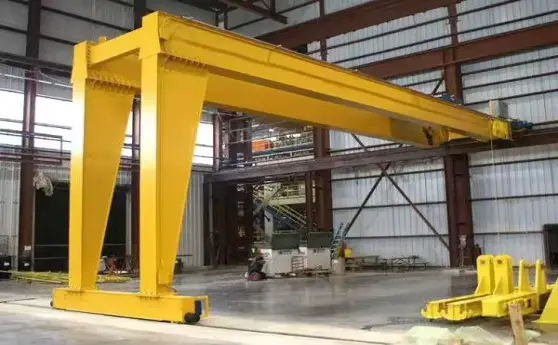
Enterprise factories or storage warehouses have limited internal space, and users refuse to occupy excessive production and handling working areas
-
The existing factory buildings are built in early years without reserved top load-bearing beams, so it is impossible to install traditional overhead cranes
-
Users have limited equipment procurement budgets and tend to choose hoisting machinery with high cost performance and low daily later maintenance costs
-
Enterprises need flexible light and medium-duty lifting equipment that can be used both indoors and outdoors to cope with diversified temporary handling work
Final Summary
To sum up, the semi gantry crane is a highly practical space-saving hoisting device designed targeting actual industrial usage pain points. It abandons redundant complicated structural designs and unreasonable high pricing, and can steadily solve various heavy goods handling difficulties in factories and warehouses with stable performance.