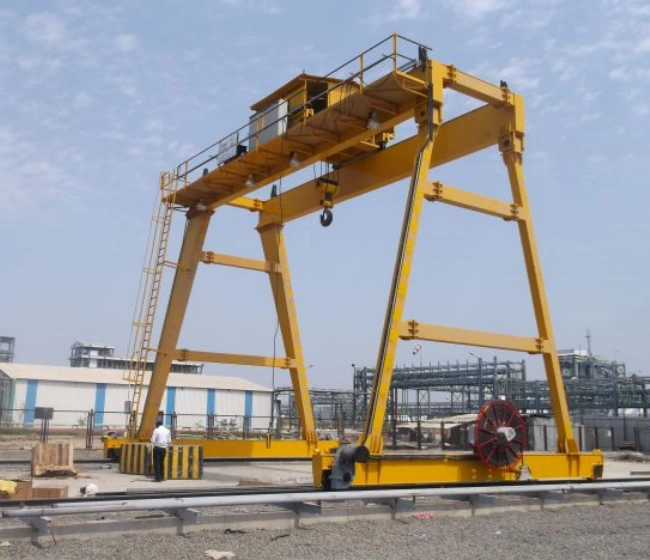
Double Girder Overhead Crane Advantages – What You Need to Know
When your material handling demands exceed the limits of a single girder design, double girder overhead cranes become the clear choice. But what exactly makes them superior?
In this article, we break down the key double girder overhead crane advantages — from higher capacities and longer spans to better hook height utilization and lower maintenance costs.
What Is a Double Girder Overhead Crane?
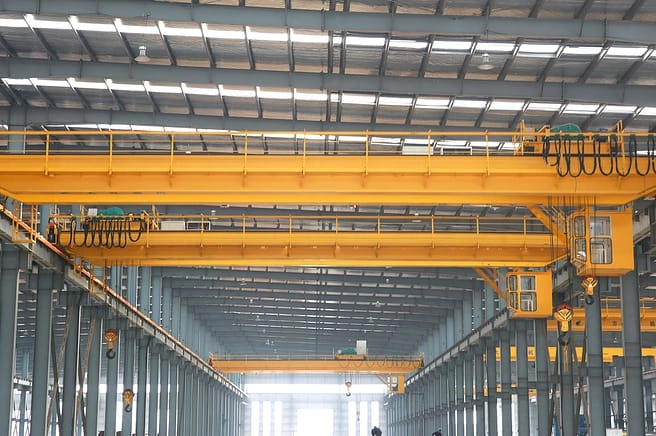
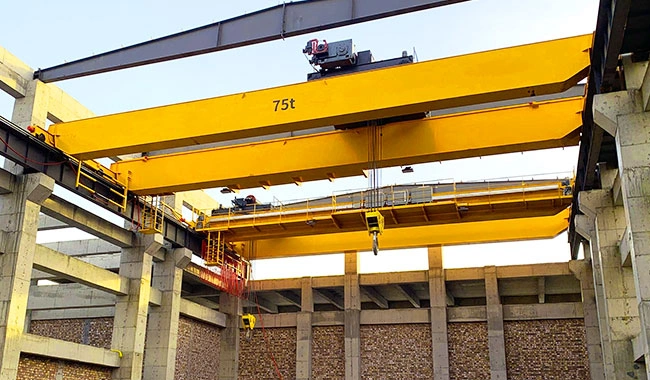
A double girder overhead crane features two parallel bridge girders that support the trolley and hoist from above, rather than hanging beneath a single girder.
This simple structural change unlocks a range of performance benefits that single girder cranes simply cannot match.
The 7 Major Double Girder Overhead Crane Advantages
1. Higher Load Capacity
The most significant advantage: double girders support much heavier loads.
Single girder typical max: 20 tons
Double girder typical range: 5 to 100+ tons
For applications involving heavy machinery, steel coils, large molds, or shipping containers, a double girder design is often the only viable option.
2. Longer Spans Without Sagging
A double girder structure provides greater rigidity, allowing spans of 80 to 120+ feet with minimal deflection.
This is critical for:
Wide warehouse bays
Shipbuilding halls
Steel stockyards
Large assembly areas
3. Better Hook Height (More Vertical Lift)
Because the trolley runs on top of the girders instead of hanging below them, the hook can rise higher relative to the building’s eave height.
Practical result: For the same building height, a double girder crane typically provides 2 to 4 feet of additional lift height — a huge gain in low-ceiling facilities.
4. Improved Hook Approach (Closer to Runway)
Hook approach is the minimum distance from the crane hook to the runway rail. Double girder designs allow the hoist to travel closer to the end trucks.
This means:
Better coverage near building walls
Less “dead zone” in your workspace
More usable floor area
5. Higher Duty Cycle Capability
Double girder cranes are built for continuous, severe service.
| CMAA Class | Typical Application | Single Girder | Double Girder |
|---|---|---|---|
| Class C (Moderate) | Machine shops | ✓ Recommended | ✓ Optional |
| Class D (Heavy) | Steel warehouses | ✓ Up to 20t | ✓ Best choice |
| Class E (Severe) | Scrap yards, foundries | ✗ Not recommended | ✓ Required |
| Class F (Continuous severe) | Automated process lines | ✗ Not suitable | ✓ Required |
For 24/7 operations, double girder advantages become even more pronounced.
6. Easier Hoist Maintenance and Replacement
In a double girder design, the hoist and trolley sit on top of the girders. Technicians can access them via a service platform or walkway.
Benefits:
Safer maintenance at height
Faster hoist change-outs
Lower long-term service costs
In contrast, a single girder crane often requires a separate manlift or scaffolding to reach the hoist hanging underneath.
7. Future Expansion Capability
Double girder cranes are easier to upgrade. Many are designed with spare capacity in the girders and end trucks, allowing you to:
Increase hoist capacity (e.g., from 10t to 15t)
Add a second hoist or trolley
Integrate auxiliary hoists for light loads
This future-proofs your investment.
Double Girder vs. Single Girder: Quick Comparison
| Feature | Single Girder | Double Girder |
|---|---|---|
| Typical capacity | 1 – 20 tons | 5 – 100+ tons |
| Maximum span | ~80 ft | ~120+ ft |
| Hook height | Lower | Higher (+2–4 ft) |
| Hook approach | Poor (farther from wall) | Good (closer to wall) |
| Duty class | Up to Class D | Class D, E, F |
| Initial cost | Lower | Higher (15–30% premium) |
| Maintenance access | More difficult | Easier (walkway available) |
When Should You Choose a Double Girder Overhead Crane?
Consider a double girder design if:
Required capacity exceeds 15–20 tons
Span is wider than 70 feet
You need maximum hook height in a limited building
Your operation runs multiple shifts or continuous duty
You want easier future upgrades (second hoist, higher capacity)
If none of these apply, a single girder crane may still be the more economical choice.
Cost Considerations
Yes, double girder cranes cost more — typically 15% to 30% higher than a single girder design of similar capacity.
However, the total cost of ownership often favors double girders in heavy-duty applications due to:
Longer component life
Less structural deflection (reducing wear on rails and wheels)
Lower maintenance labor costs
For a crane expected to operate 10+ years, the premium pays for itself.
Summary of Double Girder Overhead Crane Advantages
To put it simply:
Double girder overhead cranes deliver higher capacity, longer spans, greater lift height, better wall coverage, and higher duty ratings — at a reasonable initial premium and lower long-term maintenance cost.
If your application demands reliability and performance above 20 tons or beyond Class D duty, there is no substitute.
Need the Right Crane for Your Facility?
Every facility is unique. The best crane design depends on your:
Load weight and dimensions
Building eave height and column spacing
Duty cycle (hours per day / lifts per hour)
Future expansion plans
Tell us about your project. Fill in the information below, and our engineering team will recommend the optimal double girder (or single girder) solution — with a preliminary layout drawing and budget quote — within 48 hours.
📧 Email your requirements to: [insert your email address]
Please include: capacity (tons), span (ft), lift height (ft), duty cycle, and any existing runway details.