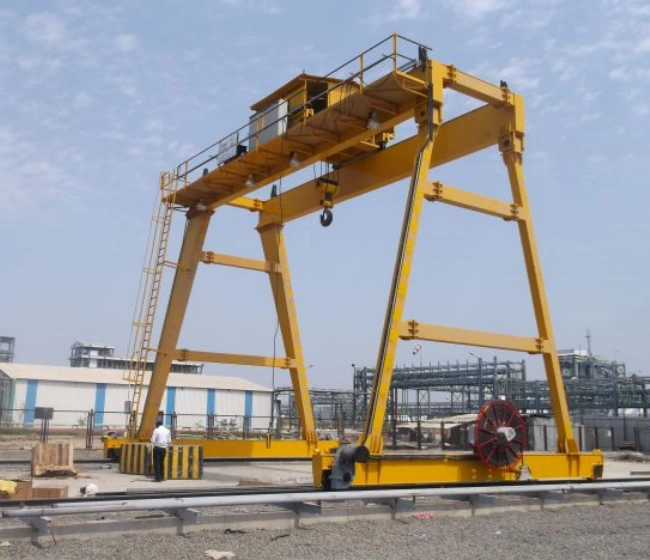
Single Girder Overhead Crane Capacity Range – When to Choose Double Girder
When selecting material handling equipment for your workshop or warehouse, one of the first questions is: what is the typical capacity range for a single girder overhead crane?
The answer is straightforward yet critical for safety, cost control, and long-term reliability.
What Is a Single Girder Overhead Crane?
A single girder overhead crane consists of one bridge girder supported by end trucks that travel along runway rails. The hoist and trolley run directly on the bottom flange of that single girder.
This design is the most popular choice for light to medium-duty applications because it offers:
Lower initial cost
Lighter building structure requirements
Easier installation and maintenance
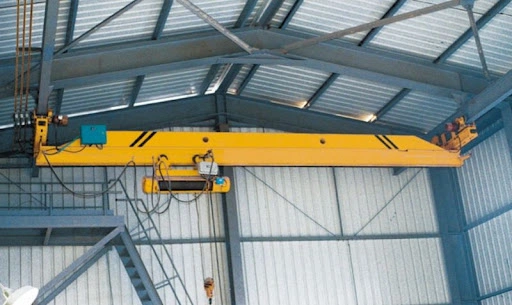
But the most important selection parameter remains capacity range.
Standard Capacity Range for Single Girder Cranes
Industry standards (CMAA, FEM, ISO) define a clear capacity range for single girder overhead cranes:
Typical capacity range: 1 ton to 20 tons
Within this range, the most commonly manufactured and sold capacities include:
| Capacity (Tons) | Typical Application |
|---|---|
| 1 – 2 tons | Machine shops, assembly stations |
| 3 – 5 tons | Warehouses, fabrication shops |
| 5 – 10 tons | General manufacturing, steel service centers |
| 10 – 15 tons | Heavy fabrication, foundry support |
| 15 – 20 tons | Industrial plants, large workshops |
Can a Single Girder Crane Exceed 20 Tons?
Technically, yes, but it is not recommended for most applications.
Above 20 tons, the required girder depth, flange width, and overall weight increase significantly. At that point, a double girder overhead crane becomes more economical and safer.
Most manufacturers set a practical limit of 20 tons for single girder designs. Some offer up to 25 or even 30 tons under special engineering, but the cost advantage disappears.
Why the Capacity Range Matters for Your Facility
Choosing the right capacity directly affects:
1. Building Structure Load
A single girder crane imposes lighter wheel loads than a double girder design. Staying within the 1–20 ton range typically allows use of standard building frames without reinforcement.
2. Hoist and Trolley Selection
Within this range, standard wire rope hoists (e.g., 1–20t) and chain hoists (typically up to 5t) are readily available off the shelf.
3. Span and Lift Height Interaction
As capacity increases within the 1–20 ton range, maximum practical span decreases. For example:
5-ton single girder: span up to 80 ft
15-ton single girder: span typically limited to 60–70 ft
4. Duty Classification
Single girder cranes up to 20 tons are ideal for CMAA Class C (moderate) and Class D (heavy) service. For continuous severe duty (Class E or F), a double girder crane is still preferred.
How to Select the Right Capacity for Your Crane
Follow this simple three-step process:
Step 1: Calculate your maximum load weight
Include the product, lifting attachments (spreader bars, magnets, vacuum lifters), and rigging.
Step 2: Add a safety margin
Never select a crane with capacity exactly equal to your maximum load. A 20–25% margin is standard.
Step 3: Match to standard ratings
Choose from common ratings: 2, 3, 5, 7.5, 10, 15, or 20 tons.
Example: Your heaviest product is 8 tons. Add 20% → 9.6 tons. Select a 10-ton single girder overhead crane.
Capacity Range vs. Other Crane Types
| Crane Type | Typical Capacity Range |
|---|---|
| Single Girder Overhead Crane | 1 – 20 tons |
| Double Girder Overhead Crane | 5 – 100+ tons |
| Jib Crane | 0.25 – 5 tons |
| Gantry Crane (adjustable) | 1 – 20 tons |
This comparison shows why the 1–20 ton range is the sweet spot for single girder designs.
Common Misconceptions About Single Girder Capacity
❌ *“I can always upgrade a 10-ton crane to 15 tons later.”*
✅ False. The girder, end trucks, and runway are designed for a specific maximum load.
❌ *“A 20-ton single girder is just as good as a 20-ton double girder.”*
✅ Not exactly. At 20 tons, double girders offer less deflection, better hook approach, and longer service life.
❌ *“Smaller capacity means cheaper, so I should buy a 5-ton crane for 1-ton loads.”*
✅ Not always. Overly conservative choices waste money and building space.
When to Move to a Double Girder Crane
Consider a double girder overhead crane if:
Required capacity exceeds 20 tons
Span is very wide (>80 ft) even with lower capacity
Hook height must be maximized (double girders allow the hoist to sit between girders)
Duty cycle is continuous severe (CMAA Class E or F)
Final Recommendation
For 90% of standard industrial applications — warehouses, machine shops, assembly lines, steel service centers — the optimal single girder overhead crane capacity range is 1 to 20 tons, with the most common sweet spot being 5 to 10 tons.
Always specify your crane based on actual maximum load + 20% margin, and confirm with a certified crane manufacturer or engineer.
*Need help selecting the right capacity for your facility? Contact our engineering team with your load weight, span, and lift height — we’ll recommend the most cost-effective single girder or double girder solution within 24 hours.*