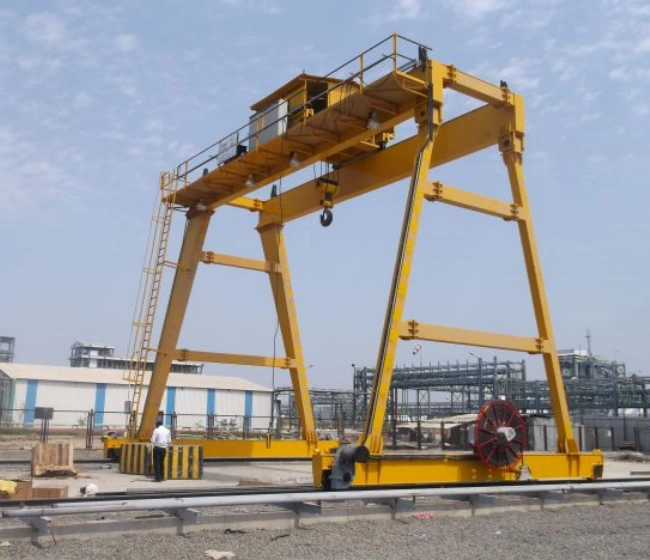
What Size Overhead Crane Do I Need for a 10 Ton Load?
If you are moving a 10‑ton load in your workshop, warehouse, or factory, choosing the correct overhead crane size is not just about capacity — it directly affects safety, equipment lifespan, and operational cost.
Many buyers mistakenly think: “A 10‑ton load needs a 10‑ton crane.”
That is partially true, but the real answer involves rated capacity, duty class, span, lifting height, and dynamic factors.
This guide helps you select the right overhead crane for a 10‑ton load, step by step.
1. Start with Rated Capacity: 10 Ton (Minimum)
For a maximum load of 10 tons, the crane’s rated capacity must be at least 10 tons.
Never use a 5‑ton or 8‑ton crane for a 10‑ton load — that is a serious safety violation.
Many experienced buyers choose a 12.5‑ton or 15‑ton crane for a 10‑ton load. Why?
Provides a safety buffer for future heavier loads.
Reduces structural fatigue over time.
Extends maintenance intervals.
💡 Recommendation: For daily 10‑ton lifts, a 10‑ton crane is acceptable. For continuous or critical operations, consider 12.5 tons.
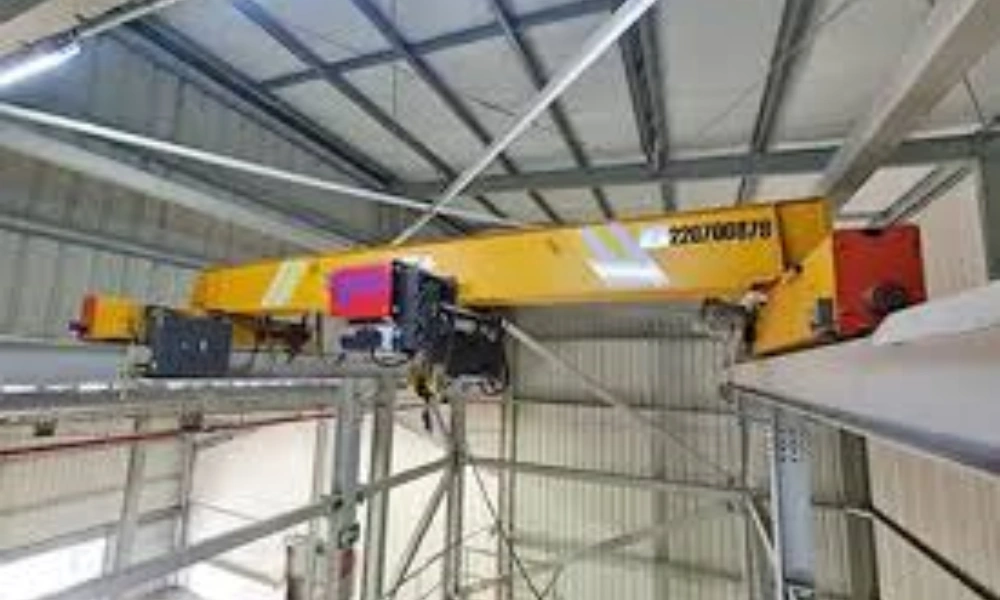
2. Single Girder vs. Double Girder — Which One for 10 Tons?
10 tons is the typical borderline between single girder and double girder overhead cranes.
| Feature | Single Girder | Double Girder |
|---|---|---|
| Best for span | Up to 25 m | Over 25 m |
| Lifting height | Standard | Higher headroom |
| Duty class | Light to moderate | Moderate to heavy |
| Cost | Lower | Higher |
| Stability | Good | Excellent |
Choose single girder if: span ≤ 20 m, low headroom, light to moderate use.
Choose double girder if: span > 25 m, high lifting height, frequent full‑capacity lifts.
✅ For most general 10‑ton applications, a single girder overhead crane is cost‑effective and widely used.
3. Duty Class: The Most Overlooked Factor
Capacity alone is never enough.
Cranes are classified by how frequently and intensely they operate.
Common standards: CMAA (US) and FEM/ISO (International).
For a 10‑ton load:
| Usage intensity | CMAA class | FEM/ISO class |
|---|---|---|
| Occasional maintenance | A3 | A3 |
| Light assembly work | A4 | A4 |
| General warehouse (most common) | A5 | A5 |
| Heavy machine shop | A6 | A6 |
| Continuous steel mill use | A7 | A7 |
👉 For a standard 10‑ton overhead crane in daily industrial use, CMAA Class C (A5) is recommended.
Using a lower class crane (e.g., A3) for daily 10‑ton lifts will cause rapid wear, brake failure, and structural cracks.
4. Dynamic Load — Why Your 10‑Ton Load Is Heavier in Motion
A static 10‑ton load is one thing. A moving 10‑ton load is another.
When the crane starts, stops, or accelerates, dynamic forces add stress.
Engineers use an impact factor — typically 1.1 to 1.4.
That means:
Static load = 10 tons
Dynamic design load = 11 to 14 tons
This is why a correctly designed 10‑ton crane uses heavier components than a simple 10‑ton static rating suggests.
🔧 Always tell your supplier:
*“10‑ton load, with normal acceleration/deceleration”* — they will apply the correct impact factor.
5. Span and Lifting Height — Get These Right
Two more critical dimensions:
Span = distance between runway rails (center to center)
Common spans: 10 m, 15 m, 20 m, 25 m, 30 m.
The longer the span, the larger and heavier the bridge girder.Lifting height = from floor to maximum hook position
Standard: 6 m to 20 m.
Higher height requires longer wire rope and larger drum.
✅ Measure your building’s column spacing and available headroom before ordering.
6. Control Type: Pendant vs. Remote
Pendant control (corded push‑button): low cost, reliable, but operator walks with the load.
Radio remote control: safer, better visibility, higher productivity — strongly recommended for 10‑ton loads.
7. Hoist Speed — Single or Dual?
For precision positioning, choose dual speed (e.g., 5/0.8 m/min).
For pure lifting/lowering, single speed may be enough.
8. Real‑World Example Specification for a 10‑Ton Overhead Crane
Here is a typical, buyable specification for a general 10‑ton load:
| Parameter | Value |
|---|---|
| Rated capacity | 10,000 kg (10 tons) |
| Span | 20 m |
| Lifting height | 10 m |
| Duty class | CMAA Class C / FEM A5 |
| Structure | Single girder (or double girder if span > 25 m) |
| Hoist type | Electric wire rope hoist |
| Control | Radio remote control |
| Impact factor considered | 1.2 |
| Power supply | 380V / 50Hz / 3 phase (customizable) |
This crane will safely, reliably, and efficiently handle a 10‑ton load for years.
9. Which Industries Use a 10‑Ton Overhead Crane?
Metal fabrication shops
Machine tool warehouses
Automotive parts plants
Construction material storage
Maintenance bays for heavy equipment
10. Common Mistakes to Avoid
❌ Buying a crane without specifying duty class — leads to early failure.
❌ Ignoring dynamic load — increases accident risk.
❌ Using a 10‑ton crane at 100% capacity 24/7 — requires A6/A7 class.
❌ Wrong span or lifting height — causes poor coverage or collision.
Conclusion: What Size Overhead Crane for a 10‑Ton Load?
The short answer:
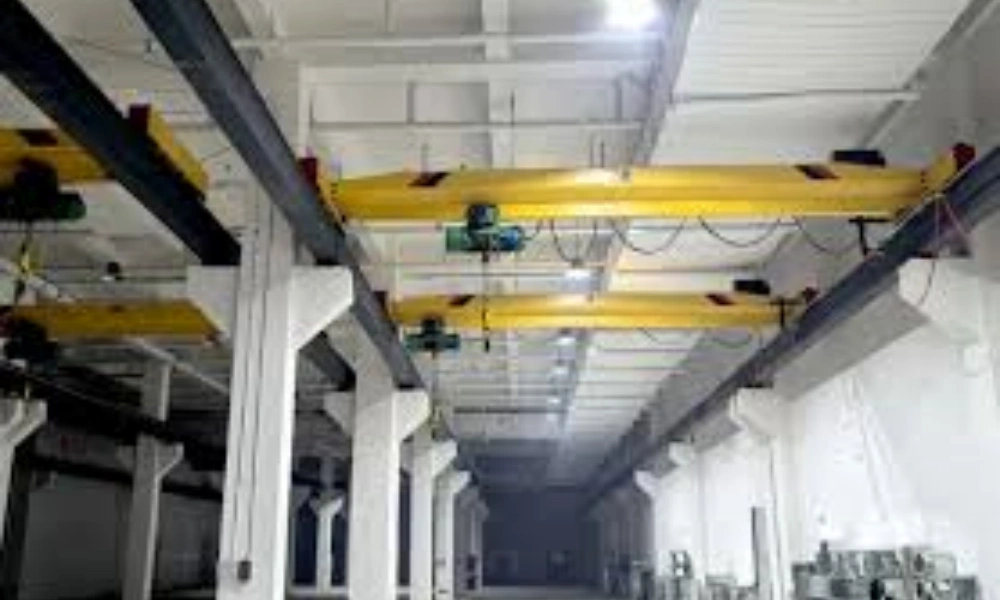
A 10‑ton rated overhead crane, single girder for spans ≤ 20 m, double girder for larger spans, CMAA Class C (A5) duty class, with dynamic load factor applied.
But the complete answer also includes: span, lifting height, usage frequency, and control type.
If you are still unsure, provide the following to any professional crane supplier:
Load: 10 tons
Hours/day and lifts/hour
Span and lifting height
Building headroom
Desired duty class (A5 is a safe start)
A properly sized 10‑ton overhead crane will increase productivity, reduce downtime, and keep your operators safe — decade after decade.
How to Accurately Calculate Overhead Crane Span?