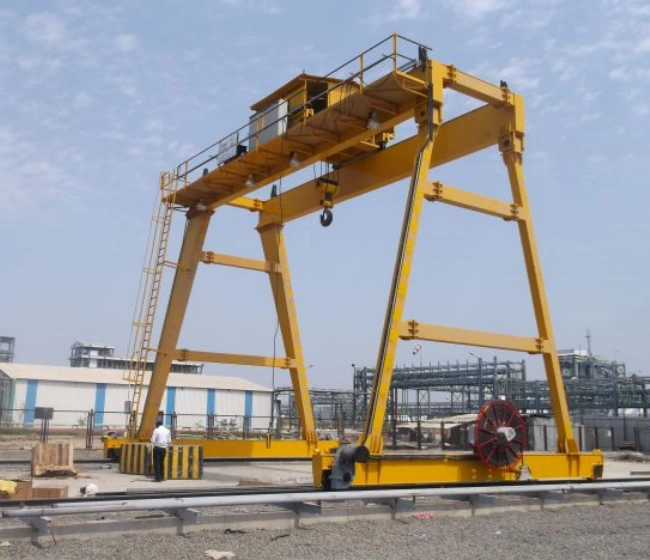
Gantry Crane Span Selection: Key Factors and Calculation Methods
When purchasing a gantry crane, most buyers instinctively prioritize lifting capacity. However, gantry crane span selection is equally critical—and often more consequential. A crane with insufficient capacity can sometimes be derated for lighter loads, but a crane with the wrong span simply cannot reach the positions it needs to reach. There is no operational workaround for a span that falls short. Proper gantry crane span selection directly impacts your productivity, safety, and long-term operating costs.
This guide covers all the key factors and calculation methods you need to master gantry crane span selection, helping you avoid expensive mistakes and ensuring your investment delivers maximum value.
What Is Gantry Crane Span?
Before diving into the key factors of gantry crane span selection, it's essential to understand what the term actually means. The span of a gantry crane is the center-to-center distance between its two runway rails. This is the number that appears in the crane's specification—for example, a "20-meter span gantry crane."
However, successful gantry crane span selection requires recognizing a critical distinction: span is not the same as effective working width. The hook cannot travel all the way to the legs. Due to the trolley's approach distance, the actual area the crane can cover is always smaller than the nominal span. Ignoring this distinction is one of the most common mistakes in gantry crane span selection.
Why Proper Span Selection Matters
Getting gantry crane span selection right ensures the crane covers your required working area safely and efficiently. Getting it wrong, however, creates serious problems that affect every aspect of your operation:
Span too narrow: The crane creates dead zones where the hook cannot reach, forcing operators to manually move loads into position—eliminating the productivity advantage the crane was purchased to provide.
Span too wide: The main beam becomes heavier, deflection control becomes stricter, wheel loads increase significantly, and foundation costs rise dramatically. A larger span also consumes more power during operation and increases transportation costs.
When conducting gantry crane span selection, remember that "bigger" is not necessarily "better." The goal is to find the sweet spot that covers your actual working area while minimizing unnecessary structural and operational costs. Effective gantry crane span selection balances coverage, cost, and safety.
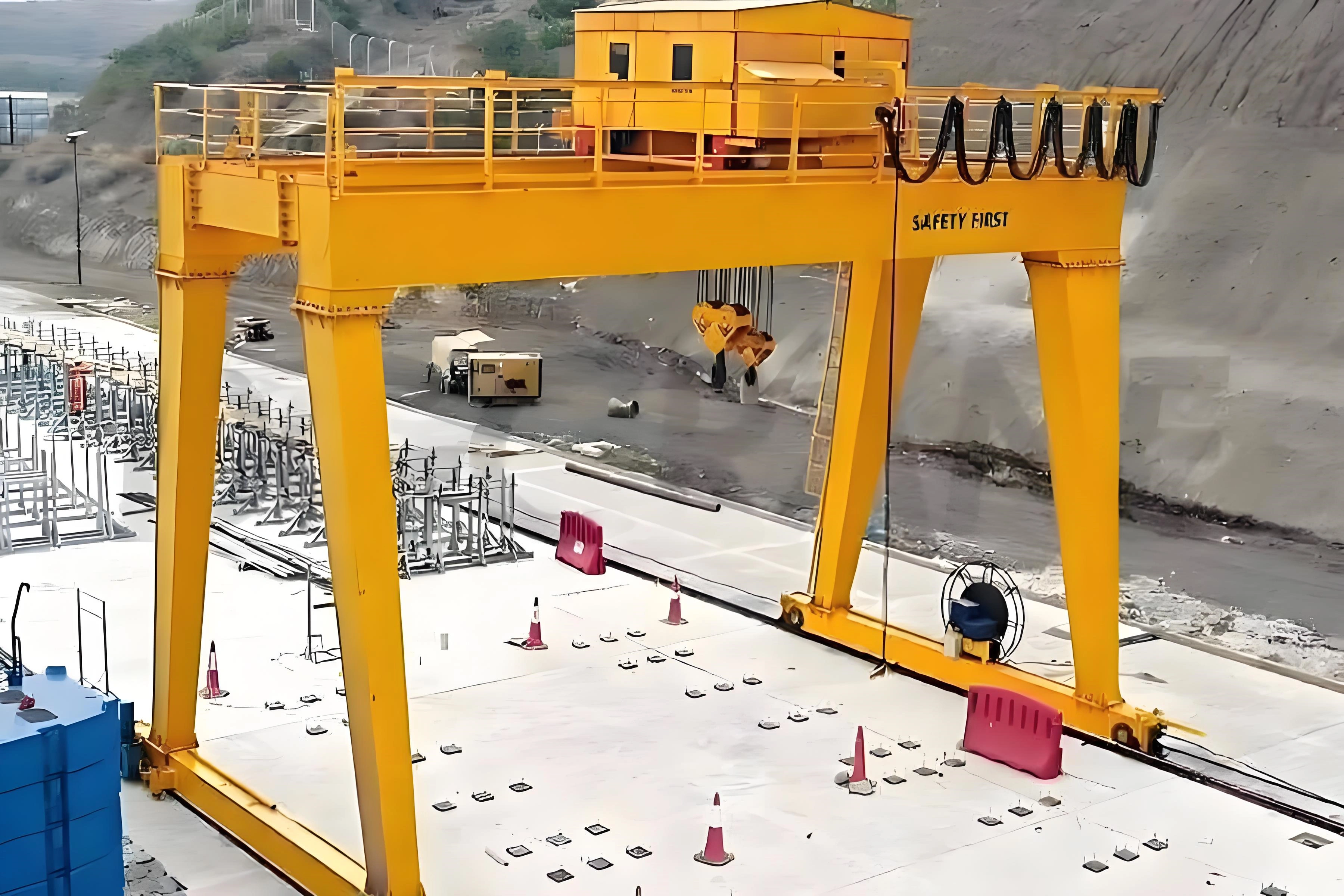
Key Factors Affecting Gantry Crane Span Selection
There are several critical factors you must evaluate during gantry crane span selection. Overlooking any of them can lead to an undersized or oversized crane.
1. Required Working Area
The most fundamental factor in gantry crane span selection is the actual area your crane needs to cover. This is not simply the width of your building. You must measure the space where loads will be picked up, moved, and set down—including clearance for workers, forklifts, trucks, and other equipment.
2. Approach Distance
This is the most misunderstood factor in gantry crane span selection. Approach distance is the minimum gap between the runway rail centerline and the nearest point the trolley can travel. For most industrial gantry cranes, this ranges from 200 to 400 millimeters per side. You must account for both sides when calculating the effective working width.
3. Load Dimensions and Handling Method
The size and shape of your typical loads directly influence gantry crane span selection. Wider loads require more space for safe swinging and maneuvering. Similarly, if you use specialized attachments (like C-hooks or lifting beams), they add to the required clearance and must be factored into your gantry crane span selection.
4. Ground and Foundation Conditions
Gantry crane span selection also depends on what your crane will sit on. A wider span increases wheel load, which may require reinforced concrete foundations or upgraded rail systems. Always verify ground bearing capacity during gantry crane span selection.
5. Future Expansion Plans
Smart gantry crane span selection includes a reasonable allowance for future changes. If you plan to expand your workshop or yard, a slightly wider span today can save you from replacing the entire crane later. However, avoid excessive allowances that drive up immediate costs unnecessarily.
The Step-by-Step Calculation Method
Here is the practical approach to gantry crane span selection for your facility:
Step 1: Measure Your Effective Working Width Requirement
Start by determining the actual width of the area that must be covered by the hook. Include side clearances for safe operation. This is your required effective working width.
Step 2: Identify Your Crane's Approach Distance
Consult the crane manufacturer's specifications to find the approach distance for the specific model you are considering. This number is usually provided in the technical datasheet. If you are uncertain, most standard gantry cranes have an approach distance of approximately 300mm per side.
Step 3: Apply the Span Formula
The core formula for gantry crane span selection is:
Required span = Required effective working width + (Approach distance × 2)
For example, if your required effective working width is 19.5 meters and your crane has a 350mm approach on each side, the minimum span should be 19.5 + 0.7 = 20.2 meters. In practice, you would round up to the next standard size.
Step 4: Verify Ground Load Capacity
Once you have a preliminary span number, calculate the resulting wheel load and verify that your floor or yard can support it. If not, you may need to adjust your gantry crane span selection or reinforce the foundation.
Step 5: Finalize with Manufacturer Input
Always involve the crane manufacturer in the final stage of gantry crane span selection. They can provide precise data on approach distances, wheel loads, and deflection limits that are specific to their equipment.