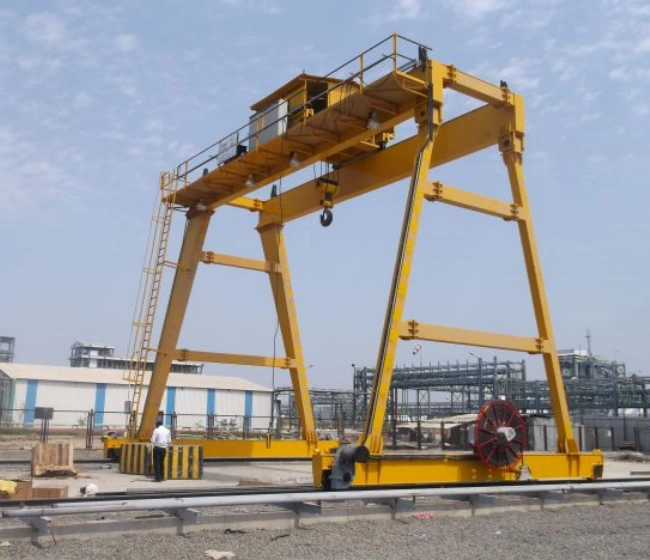
RMG vs RTG Crane: Key Differences & Which One Fits Your Yard Best?
Choosing the right container gantry crane for your terminal or intermodal yard is a critical decision. Two dominant options stand out: RMG (Rail-Mounted Gantry Crane) and RTG (Rubber-Tired Gantry Crane) .
While both are designed for stacking and moving containers, their operational models, infrastructure needs, and total cost of ownership differ significantly. This article breaks down the core differences between RMG and RTG cranes and helps you determine which one best suits your specific site conditions.
What is an RMG Crane?
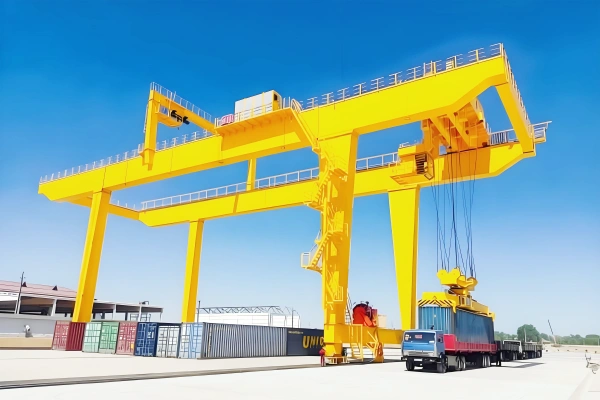
An RMG (Rail-Mounted Gantry Crane) runs on fixed steel rails embedded in the ground. It is typically powered directly by electricity via a cable reel or conductor bar.
Key characteristics of RMG:
High-precision positioning (±5mm)
Faster hoisting and traveling speeds
Longer design life (over 25 years)
Lower maintenance requirements
Easier to automate (fully automated RMG systems are common)
RMG cranes are most commonly found in large automated container terminals, rail freight yards, and high-density storage facilities.
What is an RTG Crane?
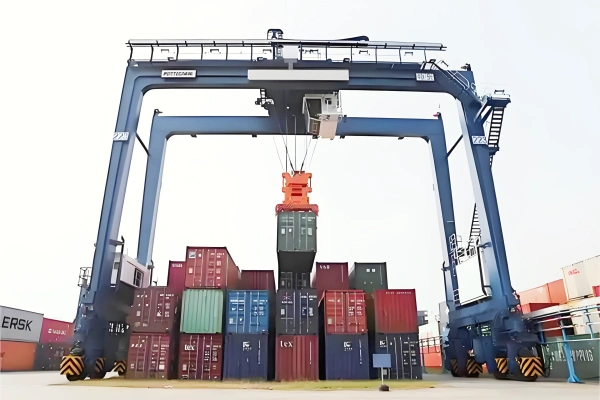
An RTG (Rubber-Tired Gantry Crane) moves on rubber tires without the need for fixed tracks. Most RTGs are powered by diesel generator sets, though electric (e-RTG) versions with cable reels or busbars are increasingly popular.
Key characteristics of RTG:
Flexible mobility – can change rows and turn within the yard
No rail infrastructure required
Lower initial capital investment
Capable of stacking 4–5 containers high (1-over-5 or 1-over-6 configurations)
Suitable for medium to low-volume terminals
RTG cranes dominate small to mid-sized ports, multi-purpose terminals, and temporary or leased yards due to their operational flexibility.
Head-to-Head Comparison: RMG vs RTG
Below is a detailed comparison across the factors that matter most to terminal operators and project planners.
| Feature | RMG (Rail-Mounted Gantry) | RTG (Rubber-Tired Gantry) |
|---|---|---|
| Mobility | Fixed to rails; cannot move between blocks | Free-moving; can transfer between blocks and yards |
| Power Source | Direct electric (grid-powered) | Diesel or electric (e-RTG with cable/busbar) |
| Positioning Accuracy | ±5 mm – excellent for automated operations | ±50 mm – requires skilled operators or assisted steering |
| Stacking Height | 5–6 containers high | 4–5 containers high |
| Lifting Speed (full load) | 13–20 m/min | 10–18 m/min |
| Design Life | 25+ years | 15 years (typical) |
| Annual Maintenance Cost | ~0.1% of equipment value | ~0.7% of equipment value |
| Infrastructure Required | Crane rails, level ground, strong substructure | Compacted ground; no rails needed |
| Automation Readiness | High – easily integrated with TOS and AGVs | Moderate – requires more retrofitting |
| Emissions & Noise | Zero emissions, low noise | Diesel RTG: high emissions; e-RTG: similar to RMG |
Which Crane Fits Your Yard Better?
The choice between RMG and RTG depends entirely on your operational profile, long-term plans, and site constraints.
✅ Choose RMG if:
1. You operate a large, dedicated container terminal
High-volume, high-intensity operations benefit from RMG’s speed, precision, and reliability.
2. You are building an automated or semi-automated yard
RMG integrates seamlessly with terminal operating systems (TOS), automated stacking cranes (ASC), and AGV/ICT interfaces.
3. Your yard serves rail intermodal operations
RMG cranes align perfectly with rail tracks for efficient train-to-container transfer.
4. You have a stable, long-term site layout
Rail installation is a one-time investment that pays off over decades of lower operating costs.
5. Environmental regulations are a priority
RMG’s zero on-site emissions and low noise help meet green port certifications and ESG targets.
✅ Choose RTG if:
1. You run a small to mid-sized or multi-purpose terminal
RTG’s ability to switch between containers, breakbulk, and project cargo adds valuable flexibility.
2. Your yard layout is irregular or space-constrained
RTGs can turn (0–90°) and crab steer, adapting to odd-shaped or temporary yards.
3. Your container volume fluctuates seasonally
RTG mobility allows you to reassign equipment where demand is highest without costly rail expansion.
4. You have a limited initial budget
No rail installation means lower civil works costs. RTG provides a faster, lower-risk start.
5. Grid power is unreliable or unavailable
Diesel RTG operates independently of local power infrastructure, ideal for remote or developing sites.
Cost Considerations: Initial Investment vs Lifecycle Cost
A common mistake is comparing only the purchase price.
RTG has a lower upfront cost – no rails, simpler foundation, faster deployment.
RMG has a lower total cost of ownership (TCO) over 15–20 years due to:
Lower energy consumption (electric vs diesel)
Significantly lower maintenance (~0.1% vs ~0.7% of asset value per year)
Longer equipment life (25+ years vs 15 years)
For terminals planning to operate more than 10 years at the same location, RMG often proves more economical despite the higher initial investment.
The Market Trend: Why RMG Is Gaining Ground
Although RTG still accounts for over 95% of existing rubber-tired gantry cranes in global service, new large-scale and automated terminals are increasingly choosing RMG.
Why?
Labor costs – Automation reduces operator headcount.
Energy prices – Electricity is cheaper and more stable than diesel.
Environmental pressure – Ports face tightening emissions regulations.
Throughput demand – RMG’s higher speed and density increase land utilization.
That said, RTG remains the practical choice for smaller, flexible, or low-volume operations.
Quick Recommendation Table
| Yard / Operation Type | Recommended Crane | Key Reason |
|---|---|---|
| Large automated container terminal | RMG | High speed, precision, automation-ready |
| Small to mid-sized multi-purpose port | RTG | Flexibility, lower initial cost |
| Rail intermodal yard | RMG | Perfect alignment with rail operations |
| Temporary or leased facility | RTG | No sunk cost in infrastructure |
| Greenfield project with 20+ year plan | RMG | Lower lifecycle cost, higher ROI |
| Low-volume or seasonal yard | RTG | Mobility and low commitment |
Final Verdict
RMG and RTG cranes are not interchangeable. Choosing the wrong type leads to either underutilized equipment or unnecessary infrastructure expense.
RMG delivers superior efficiency, precision, and long-term value for stable, high-volume, and automated sites.
RTG offers unmatched flexibility and lower entry cost for dynamic, small-to-medium, or budget-conscious operations.
Need help evaluating which configuration fits your specific yard layout, volume forecast, and budget?
👉 Contact Nucleon’s engineering team for a free site assessment and customized crane proposal.